


 Get 0.05 TON 💎
Earlier Versions
| Name | Size | Uploaded | Game Version | Downloads | |
| Bunny Ears 19.0.2 [Fabric] release | 39.05 KB | Aug 19, 2022 | 1.19 | 0 | ![download Bunny Ears Bunny Ears 19.0.2 [Fabric] release](https://minecraftpatch.com/wp-content/themes/template/img/download.png) Download Download |
| Bunny Ears 19.0.2 [Forge] +1 More release | 27.40 KB | Aug 19, 2022 | 1.19 | 1 | Download |
| Bunny Ears 19.0.1 [Fabric] release | 35.47 KB | Aug 12, 2022 | 1.19 | 4 | Download |
| Bunny Ears 19.0.1 [Forge] release | 22.45 KB | Aug 12, 2022 | 1.19 | 2 | Download |
Screenshots


Description
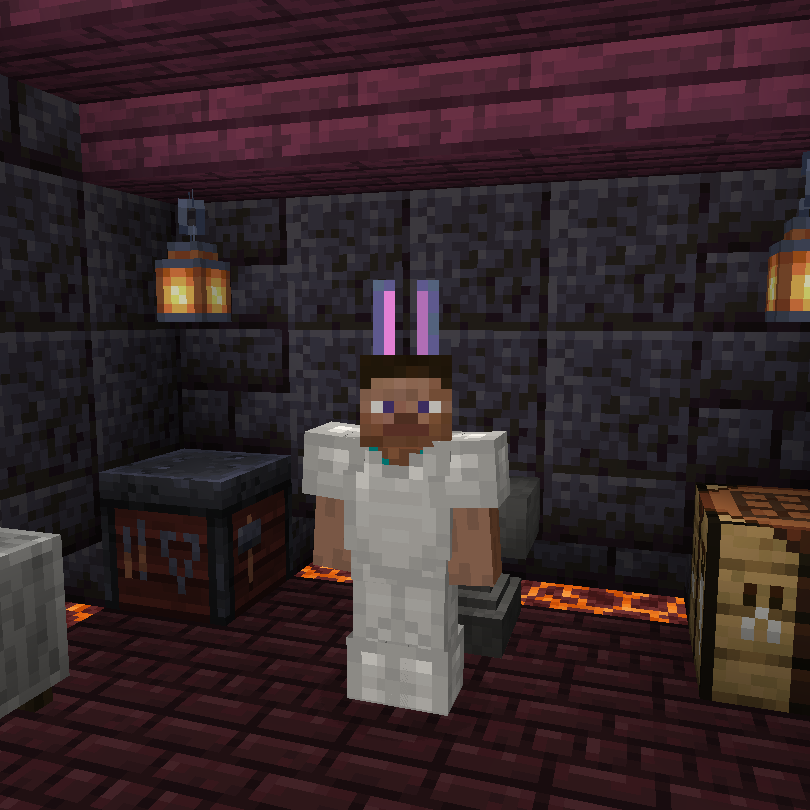
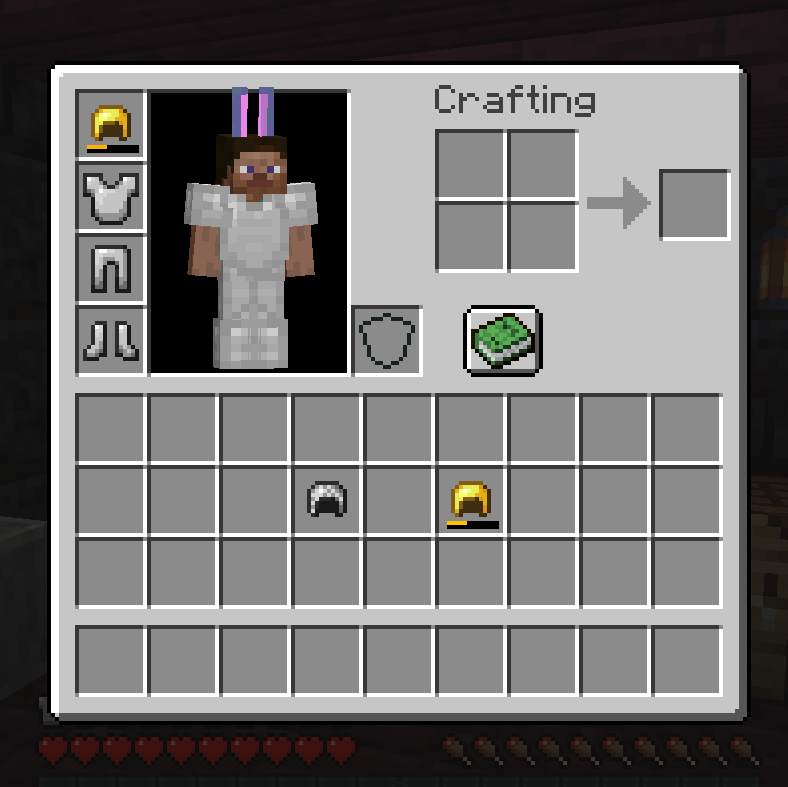
Bunny Ears is a client-side-only mod that gives you the power to customize armor models by renaming a helmet item. Add your own models using a resource pack, share that resource pack with friends, and voila! You have bunny ears instead of a boring old helmet!
How to use:
Use an anvil to rename a helmet to one of the names supported in your resource pack. Now, instead of the normal helmet model, you will see your custom model! The mod can even load different models based on durability.
Adding custom models:
To add a custom hat, create a resource pack with the following:
- Model
- Texture
hats.json
Model
This mod uses the same model format as blocks and items. The model must be saved under assets/[namespace]/models/hat/[model_name].json
Tips for designing your model:
- The player head is 8x8x8 and is centered underneath the 0,0 plane facing north
- Textures that are the same size as a block or item (16×16) are the most compatible. If larger textures are required, keep the image size a power of 2 (eg, 32×32 or 64×64)
Texture
The texture for each model is defined in the model itself. These do not need to be registered anywhere. You can use existing block textures or make your own.
For example, the texture ID bunnyears:hat/bunny_ears loads a texture at assets/bunnyears/textures/hat/bunny_ears.png
JSON
Register the model by adding an entry to assets/bunnyears/hats.json. The JSON file must contain the following:
hats: a list of hat specificationshat: one or more hat models. Required.damage: the minimum amount of durability damage for the model to apply. Optional. Defaults to 0.model:the namespaced ID of the model. Required.
Example
The following is a valid hats file located at assets/bunnyears/hats.json.
It specifies that head items with the custom name “bunny” should display the model at assets/bunnyears/models/hat/bunny_ears.json when the item has no damage.
The hat will use the model at assets/bunnyears/models/hat/bunny_ears_one_down.json when the item has at least 65% damage.
Finally, the hat will use the model at assets/bunnyears/models/hat/bunny_ears_both_down.json when the item has at least 75% damage.
{
“hats”: [
{
“name”: “bunny”,
“hat”: [
{
“model”: “bunnyears:bunny_ears”
},
{
“damage”: 65,
“model”: “bunnyears:bunny_ears_one_down”
},
{
“damage”: 75,
“model”: “bunnyears:bunny_ears_both_down”
}
]
}
]
}
Original idea from Decimal#0617
Add a comment