

 Get 0.05 TON 💎
Earlier Versions
| Name | Size | Uploaded | Game Version | Downloads | |
| lepidodendron-1.12.2-48.2.jar release | 17.67 MB | Jul 12, 2021 | 1.12.2 | 0 |  Download Download |
| lepidodendron-1.12.2-48.1.jar release | 17.67 MB | Jul 12, 2021 | 1.12.2 | 35 | Download |
| lepidodendron-1.12.2-48.0.jar release | 17.66 MB | Jul 10, 2021 | 1.12.2 | 172 | Download |
| lepidodendron-1.12.2-47.1.jar release | 14.59 MB | May 20, 2021 | 1.12.2 | 3,505 | Download |
| lepidodendron-1.12.2-47.0.jar release | 14.59 MB | May 19, 2021 | 1.12.2 | 71 | Download |
| lepidodendron-1.12.2-46.2.jar release | 11.39 MB | Apr 12, 2021 | 1.12.2 | 1,768 | Download |
| lepidodendron-1.12.2-46.1.jar release | 11.39 MB | Apr 11, 2021 | 1.12.2 | 117 | Download |
| lepidodendron-1.12.2-46.0.jar release | 11.39 MB | Apr 11, 2021 | 1.12.2 | 22 | Download |
| lepidodendron-1.12.2-45.2.jar release | 10.60 MB | Apr 4, 2021 | 1.12.2 | 379 | Download |
| lepidodendron-1.12.2-45.1.jar release | 10.60 MB | Apr 4, 2021 | 1.12.2 | 29 | Download |
| lepidodendron-1.12.2-45.0.jar release | 10.59 MB | Apr 3, 2021 | 1.12.2 | 105 | Download |
| lepidodendron-1.12.2-44.3.jar release | 9.86 MB | Mar 22, 2021 | 1.12.2 | 458 | Download |
| lepidodendron-1.12.2-44.2.jar release | 9.82 MB | Mar 22, 2021 | 1.12.2 | 34 | Download |
| lepidodendron-1.12.2-44.1.jar release | 9.85 MB | Mar 21, 2021 | 1.12.2 | 88 | Download |
| lepidodendron-1.12.2-44.0.jar release | 9.84 MB | Mar 21, 2021 | 1.12.2 | 58 | Download |
| lepidodendron-1.12.2-43.0.jar release | 9.05 MB | Mar 13, 2021 | 1.12.2 | 4,266 | Download |
| lepidodendron v.42.1.jar release | 8.77 MB | Mar 7, 2021 | 1.12.2 | 216 | Download |
| lepidodendron v.42.0.jar release | 8.77 MB | Mar 6, 2021 | 1.12.2 | 97 | Download |
| lepidodendron v.41.1.jar release | 8.20 MB | Feb 28, 2021 | 1.12.2 | 334 | Download |
| lepidodendron v.41.0.jar release | 8.20 MB | Feb 28, 2021 | 1.12.2 | 48 | Download |
| lepidodendron v.40.0.jar release | 7.65 MB | Feb 20, 2021 | 1.12.2 | 1,639 | Download |
| lepidodendron v.39.0.jar release | 7.07 MB | Feb 13, 2021 | 1.12.2 | 757 | Download |
| lepidodendron v.38.0.jar release | 6.98 MB | Feb 12, 2021 | 1.12.2 | 64 | Download |
| lepidodendron v.37.1jar.jar release | 6.84 MB | Feb 7, 2021 | 1.12.2 | 2,808 | Download |
| lepidodendron v.37.0.jar release | 6.84 MB | Feb 6, 2021 | 1.12.2 | 41 | Download |
| lepidodendron v.36.0.jar release | 6.39 MB | Feb 1, 2021 | 1.12.2 | 563 | Download |
| lepidodendron v.35.0.jar release | 6.13 MB | Jan 29, 2021 | 1.12.2 | 130 | Download |
| lepidodendron v.34.0.jar release | 6.03 MB | Jan 22, 2021 | 1.12.2 | 412 | Download |
| lepidodendron v.33.1.jar release | 5.80 MB | Jan 18, 2021 | 1.12.2 | 239 | Download |
| lepidodendron v.33.0.jar release | 5.78 MB | Jan 16, 2021 | 1.12.2 | 295 | Download |
| lepidodendron v.32.1.jar release | 5.39 MB | Jan 8, 2021 | 1.12.2 | 410 | Download |
| lepidodendron v.32.0.jar release | 5.38 MB | Jan 7, 2021 | 1.12.2 | 105 | Download |
| lepidodendron v.31.0.jar release | 5.21 MB | Dec 31, 2020 | 1.12.2 | 484 | Download |
| lepidodendron v.30.2.jar release | 5.01 MB | Dec 23, 2020 | 1.12.2 | 1,465 | Download |
| lepidodendron v.30.1.jar release | 5.01 MB | Dec 23, 2020 | 1.12.2 | 20 | Download |
| lepidodendron v.30.0.jar release | 5.01 MB | Dec 20, 2020 | 1.12.2 | 233 | Download |
| lepidodendron v.29.1.jar release | 4.50 MB | Dec 16, 2020 | 1.12.2 | 344 | Download |
| lepidodendron v.29.0.jar release | 4.49 MB | Dec 13, 2020 | 1.12.2 | 187 | Download |
| lepidodendron v.28.0.jar release | 4.01 MB | Dec 8, 2020 | 1.12.2 | 357 | Download |
| lepidodendron v.27.1.jar release | 3.81 MB | Dec 4, 2020 | 1.12.2 | 262 | Download |
| lepidodendron v.27.0.jar release | 3.81 MB | Dec 4, 2020 | 1.12.2 | 41 | Download |
| lepidodendron v.26.1.jar release | 3.64 MB | Nov 25, 2020 | 1.12.2 | 232 | Download |
| lepidodendron v.26.0.jar release | 3.64 MB | Nov 25, 2020 | 1.12.2 | 6 | Download |
| lepidodendron v.25.0.jar release | 3.50 MB | Nov 20, 2020 | 1.12.2 | 141 | Download |
| lepidodendron v.24.0.jar release | 3.37 MB | Nov 18, 2020 | 1.12.2 | 67 | Download |
| lepidodendron v.23.0.jar release | 3.03 MB | Nov 14, 2020 | 1.12.2 | 111 | Download |
| lepidodendron v.22.1.jar release | 2.92 MB | Nov 11, 2020 | 1.12.2 | 78 | Download |
| lepidodendron v.22.0.jar release | 2.91 MB | Nov 9, 2020 | 1.12.2 | 81 | Download |
| lepidodendron v.21.0.jar release | 2.78 MB | Nov 7, 2020 | 1.12.2 | 65 | Download |
| lepidodendron v.20.0.jar release | 2.67 MB | Nov 5, 2020 | 1.12.2 | 85 | Download |
| lepidodendron v.19.0.jar release | 2.57 MB | Nov 2, 2020 | 1.12.2 | 103 | Download |
| lepidodendron v.18.2.jar release | 2.52 MB | Nov 2, 2020 | 1.12.2 | 34 | Download |
| lepidodendron v.18.1.jar release | 2.51 MB | Nov 1, 2020 | 1.12.2 | 40 | Download |
| lepidodendron v.18.0.jar release | 2.50 MB | Oct 31, 2020 | 1.12.2 | 29 | Download |
| lepidodendron v.17.0.jar release | 2.28 MB | Oct 29, 2020 | 1.12.2 | 78 | Download |
| lepidodendron v.16.2.jar release | 2.13 MB | Oct 26, 2020 | 1.12.2 | 116 | Download |
| lepidodendron v.16.1.jar release | 2.13 MB | Oct 25, 2020 | 1.12.2 | 56 | Download |
| lepidodendron v.16.0.jar release | 2.13 MB | Oct 24, 2020 | 1.12.2 | 33 | Download |
| lepidodendron v.15.0.jar release | 1.89 MB | Oct 21, 2020 | 1.12.2 | 110 | Download |
| lepidodendron v.14.0.jar release | 1.01 MB | Oct 18, 2020 | 1.12.2 | 82 | Download |
| lepidodendron v.13.0.jar release | 1,000.50 KB | Oct 17, 2020 | 1.12.2 | 40 | Download |
| lepidodendron v.12.0.jar release | 920.47 KB | Oct 14, 2020 | 1.12.2 | 92 | Download |
| lepidodendron v.11.0.jar release | 854.29 KB | Oct 13, 2020 | 1.12.2 | 44 | Download |
| lepidodendron v.10.1.jar release | 804.94 KB | Oct 5, 2020 | 1.12.2 | 172 | Download |
| lepidodendron v.10.0.jar release | 804.93 KB | Oct 4, 2020 | 1.12.2 | 39 | Download |
| lepidodendron v.9.1.jar release | 744.61 KB | Sep 30, 2020 | 1.12.2 | 106 | Download |
| lepidodendron v.9.0.jar release | 731.47 KB | Sep 29, 2020 | 1.12.2 | 18 | Download |
| lepidodendron v.8.1.jar release | 604.96 KB | Sep 29, 2020 | 1.12.2 | 357 | Download |
| lepidodendron v.8.0.jar release | 602.16 KB | Sep 28, 2020 | 1.12.2 | 40 | Download |
| lepidodendron v.7.1.jar release | 546.97 KB | Sep 27, 2020 | 1.12.2 | 28 | Download |
| lepidodendron v.7.0.jar release | 547.02 KB | Sep 27, 2020 | 1.12.2 | 11 | Download |
| lepidodendron v.6.0.jar release | 430.05 KB | Sep 25, 2020 | 1.12.2 | 65 | Download |
| lepidodendron v.5.0.jar release | 278.50 KB | Sep 24, 2020 | 1.12.2 | 43 | Download |
| lepidodendron v.4.5.jar release | 158.92 KB | Sep 15, 2020 | 1.12.2 | 418 | Download |
| lepidodendron v.4.0.jar release | 172.16 KB | Sep 8, 2020 | 1.12.2 | 160 | Download |
| lepidodendron v.3.0.jar release | 97.73 KB | Jul 15, 2020 | 1.12.2 | 1,459 | Download |
Screenshots


Description

https://discord.gg/snzaYpu | https://twitter.com/cenotopia
Give feedback and input, get help, join discussion, sneak-peaks of development, share builds, see other modpacks and servers, etc.
This mod adds prehistoric trees and plants. Wherever possible, plant generation uses optional texture variants and trees use complex procedural generation of their shapes, and some respond to their environment as they generate, so they have a large variety of shapes and sizes within each type. And also there is some pretty original and useful new wood textures and other building materials for the builders out there. It works standalone to improve your world, but can also be integrated into the Fossils and Archeology Revival mod via CraftTweaker: details are lower down. Textures are 16px to stay in Minecraft aesthetic, with very rare excursions into 32px when absolutely essential to convey an essential purpose of something.
NOTE: You must change the config if you want anything to spawn naturally in the overworld, and set it to do so. Everything will default to NOT spawning at first (apart from algae and sponges), and left like that could only be obtained by via the CraftTweaker/Fossils+Archeology script given below. The config file is lepidodendron.cfg
SECOND NOTE: To get new mobs and revised spawns, you MUST either manually update your config fie, or else delete the config and allow the mod to re-create it. Spawner config setups are also hosted on the discord above, which you can also use.
NOTE AS WELL: The mod requires LLibrary to run: https://www.curseforge.com/minecraft/mc-mods/llibrary
AND ANOTHER NOTE: The mod VanillaFix appears to want to interfere with AI in this mod!
Content is listed below but is slowly moving to a Wiki instead.
Some preliminary info about mod setup and the (long) config file is here:
Hugely grateful credits go to Totemaster and all those listed as contributors to this project for some lovely textures, models and entities!
Dimensions
The mod currently contains these prehistoric dimensions which you can travel to (more to come), and the portal blocks needed to craft their portals are given below (you open a portal with the bone wand)
Precambrian: Stromatolites (almost no mobs currently!)
Cambrian: Sponge block (no mobs yet!)
Ordovician and Silurian: Prototaxites block

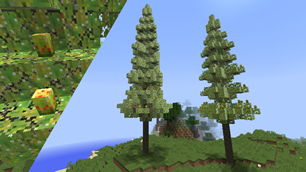
Devonian: Archaeopteris planks
Pics:


Carboniferous: Calamites Plant Fibre block
Pics:


The mod config has some basic spawners for you to add in mobs from other mods if you want to (and you know you do). You'll find mob spawn settings in the config file for the mod. Note that the spawns provided simply generate mobs during chunk-generation using a hijacked "summon" command – it's not a rounded spwaning mod. It won't apply any rules about de-spawning mobs and won't keep re-spawning new ones or do anything fancy. If you need that kind of functionality you'll want to use a dedicated spawn-control mod. Please feel free to ask questions about spawning on here or on the Discord. Forge is a bit dumb, and as I add more mobs and the config changes to setup the default spawning for them, your own config won't get automatically updated by the game engine…. silly. So if you want to grab a latest recommended spawner config, drop into the Discord as I am hosting one there.
At the bottom of the config is an experimental total-world-gen option for other vanilla or modded biomes and dimensions (be careful if you use this as you can't undo what it does): ask me on Discord if you want more information on what this is all about.
Bennettitiales (propagated by the seed method)
Bennettitales fossils are by far the single commonest fossils of woody plants from the Triassic to the end of the Cretaceous, mostly their leaves. The entire group is extinct now and are poorly-known. They were sometimes similar in appearance to the more ancient cycads but were not cycads, with some features similar to flowering plants and others to conifers as well. Reproductive structures were somewhat flower-like in appearance, but were not flowers. There is no wood craftable from their logs. For the trunk-forming instances in this mod, leaves and shoots are harvestable with silk touch or shears and placeable like vanilla leaves, although leaves/flowers have texture variants and can be placed directionally:
Baikalophyllum was a shrubby plant from the Cretaceous with dentate foliage. [FOREST or CONIFEROUS]
Cycadeoidea is a dumpy plant from the Jurassic to Cretaceous periods, with small "flowering" cones emerging from its barrel-like trunk. [SWAMP or LUSH anywhere, SAVANNA only near water, not SNOWY or COLD]
Pterophyllum was in the Williamsonia group (see below) [SAVANNA or PLAINS, only near water, not SNOWY or COLD]
Sahnioxylon is a catch-all term for various types of common woody fossils assigned to Bennettitales from the Triassic to the Cretaceous, but it is interpreted here as a quite large, branching, tree-like plant with features of several of the group combined. [HILLS or LUSH, only near water, not SNOWY]
Tyrmia is poorly-known and was a small branching shrub from the Jurassic and Cretaceous periods. [FOREST or CONIFEROUS]
Wielandiella is another small, branching plant from the Jurassic and Cretaceous periods. [FOREST or CONIFEROUS]
Williamsonia was a very common array of trunk-forming, cycad-like plants from the Cretaceous, which produced leafy "flowering" side-shoots. [SWAMP anywhere, PLAINS only near water, not SNOWY or COLD]
Zamites is a catch-all term for what were probably many different plants with similar leaves belonging to this group. It is interpreted here as approximately halfway between Sahnioxylon and Williamsonia. Its fossils are found from the Triassic until past the end-Cretaceous extinction into the early Eocene. [FOREST, HILLS or LUSH only near water, not SNOWY or COLD]
Seed-Plants (propagated by the seed method)
The plants known under this name were generally not related to ferns at all, although the term "seed-fern" is often used for many of them. They appeared during the Carboniferous and expanded to become the dominant flora of the Permian and Triassic, during which they were edged out by conifers, entering a slow decline and eventually dying out during the early Eocene. They were usually woody, seed-bearing but not flowering plants. Many appear to have been deciduous. The "fern" part of the name is purely because many species had fern-like foliage. Early in their history these plants often were very similar-looking to ferns, and some of them were perhaps more closely related to them. However, many developed a thick, fairly robust cuticle on their leaves very early on, which is not a characteristic of ferns. Later in their history they evolved considerably and many seem almost to be similar to Angiosperms (flowering plants). The group does not represent an actual family relationship, as the only shared characteristic is production of enclosed seeds rather than spores, and is diverse, with trees and shrubs as well as herbaceous plants:
Alethopteris produced very long leaves, and was a tree-sized member of the Medullosales group (see below). They produce small, flower-like, shearable strobili which provide the seeds. [SWAMP, LUSH or JUNGLE; and not SNOWY]
Callistophytales grew in the Carboniferous and Permian coal-swamps and was a liana-like plant. In this mod it climbs vertically but not sideways. [On Lepidodendron, Cordaites, Bothrodendron or Diaphorodendron trees in SWAMP, and not SNOWY. If none of the trees are set to grow in the biomes for it, it will not generate; it also does not generate on sapling-grown trees]
Caytoniales (also known as Sagenopteris from their foliage) were fairly well-developed, woody, seed-bearing plants, with deciduous, divided leaves, producing their seed in almost-berry-like organs. For a while they were thought to be genuine flowering plants. They existed from the Triassic to Cretaceous. [PLAINS; not DRY]
Dicroidium was a group of important fern-like seed-bearing plants, very characteristic of Triassic flora in the southern Gondwana continent. Many species existed in many shapes and sizes. The one in this mod is a medium-sized, loose, woody plant, a bit like a miniature tree; the natural world-gen is also possible as a leafy shoot. [SWAMP, LUSH, RIVER or FOREST; and not SNOWY]
Elkinsia is the earliest-known seed-bearing plant, appearing in the late-Devonian period. [FOREST; not DRY or SNOWY]
Emplectopteris was a very evolved Permian plant and is possibly related to the Gigantopterid group (see below), although it bears its seeds in pendulous attachments to its regular leaves. The plants in this mod are far larger than they were in real life. [SWAMP, LUSH or JUNGLE; not COLD or SNOWY]
Furcula [COMING SOON] are somewhat enigmatic branched-leaf fossils from the Triassic period. They are thought to be seed-plants with some affinity to later Angiosperms.
Gigantopterid despite the name, was an extensive group of not-gigantic, early, seed-bearing plants, flourishing during the Permian period. They appear to be a very developed group in terms of presentation of seeds and molecular biology; seeds were borne on highly modified leaves. Some speculate that these, or something very like these, are the group from which Angiosperms (flowering plants) developed. They were thought to include both scrambling and erect plants and had frond-like but undivided leaves, quite large in size, and fossils are very distinctive, but the group is diverse. They are sometimes defined outside the main "seed fern" group as their own group. The ones in this mod are somewhat larger than in real life. [SWAMP, LUSH or JUNGLE; not COLD or SNOWY]
Gangamopteris is related to Glossopteris and is a similar plant.
Glossopteris is a name given to a wide range of related seed-bearing plants from the southern polar regions of the Gondwana continent during the Permian period (opinion is divided onto survival in the Triassic) forming a major part of the flora, from small plants up to medium-trees. They were sometimes deciduous with strap-like leaves, not at all fern-like, and their leaf debris forms extensive deposits. Like Gigantopterids, they are sometimes defined outside the "seed fern" group as their own group. Natural generation is in a tree version or a shrubby variant. Planted from saplings, they will only grow into trees though. Trees produce small, flower-like, shearable strobili which provide the seeds. [SWAMP, LUSH or JUNGLE; and not SNOWY]
Komlopteris is a poorly-known seed-fern which existed as several species from the Jurassic until the Eocene (the only known one which grew in the Cenozoic). Its forked, fern-like leaves are also classified as Dicroidium, but surely the later plant is not the same as the Triassic one? This mod interprets the plant as a small, slender tree or shrub. They produce small, flower-like, shearable strobili which provide the seeds. [MOUNTAIN or HILLS, not DRY]
Lepidopteris (not to be confused with butterflies!) was, like Pleuromeia, a beneficiary of the end-Permian extinction, expanding across the world in the vacuum created. It was a fern-like seed-bearing plant. [Any biome except DENSE, DRY, MESA or SNOWY]
Medullosales was a group of trunk-forming, fern-like pants, which bore seeds. They are closer-related to cycads than to ferns though. They grew during the Carboniferous and early Permian, successfully replacing the tree-Lycophytes, along with Psaronius-type ferns in the latter part of that time-span. This plant in the mod is a modest-sized plant, compared to how large some of them were capable of growing (see Alethopteris). [SWAMP, LUSH or JUNGLE; and not SNOWY]
Odontopteris was a medullosan plant from the late Carboniferous and Permian swamps, and is thought to have been a climbing plant. The one in this mod is a large, liana-like climber, and it grows from a sapling, like a tree would, but needs to be planted against a vertical surface and need four blocks of space above it to grow. To rotate one of the "corner" pieces, just right-click with an empty hand. [On Bothrodendron, Cordaites, Diaphorodendron, Lepidodendron or Sigillaria trees in SWAMP, not SNOWY. If none of the trees are set to grow in the biomes for it, it will not generate; it also does not generate on sapling-grown trees]
Pachypteris are fairly common leaves from unknown plants found from the late-Triassic to early-Cretaceous. This mod interprets what little we know as part of a water-planted, mangrove-rooted, cane-like plant. And why not? [ Anywhere not BEACH, OCEAN, SNOWY or COLD]
Pentoxylalaes [COMING SOON] is a fairly common but poorly understood fossil from the Jurassic until early-Cretaceous period. They are seed-bearing plants which might be related to the earlier Glossopteris, and are postulated to have been small trees.
Quasistrobus grew during the Permian period and was an unusual, probably shrubby plant, with seeds contained in cone-like structures. [SAVANNA or rarely PLAINS, not SNOWY, COLD or WET]
Scytophyllum was a plant from the Triassic with advanced, flower-like seed-bearing structures. [RIVER, JUNGLE, HILLS or LUSH]
Sphenopteris are fossils of rather similar-looking foliage from seed-bearing plants found from the late Devonian until the late Cretaceous period. We do not know if they represent a single plant or related group of plants, although they are common (except for during the Permian period, when they were rather rare). They appear to be very closely-related to true ferns, and some authors classify them as ferns. [Any biome except DRY]
Conifers (propagated by the cone/fruit method)
Aethophyllum was a plant from the Triassic. It has been found in very well-preserved fossils confirming this was most definitely a conifer, and also most definitely a herbaceous/shrubby plant: life was in full experimental mode for this. [PLAINS, FOREST or JUNGLE; not COLD or SANDY]
Agathis evolved during the Jurassic. It is a conifer in the Araucaria family. The tree in this mod is inspired by the still-extant New Zealand species Agathis australis (also known as "kauri"), which is capable of producing some of the largest trees in the world, rivalling sequoias. It creates podzol at its base (which you can change in the config if you need to). [CONIFEROUS, and not SNOWY].
Alpia was part of a group of Permian-Triassic (proto-)conifers known as Voltziales with large, frond-like branch/leaf structures, a little like a sparse modern spruce. Alpia, from the Triassic, may be amongst the true ancestors in the pine/spruce lineage. This group of conifers is poorly-known, and includes Voltzia as its major genus (though Alpia is more interesting-looking): we are only lately establishing their nature from some good fossil finds in the European Dolomites. [HILLS, not WET or DRY]
Araucaria was the dominant group of large trees worldwide from the Triassic through the Cretaceous. They formed a large part of sauropod diets and the trees' shapes and large statures still shown by the group probably evolved in competition with those sauropod browsers. In this mod, all four different Araucaria logs craft into the same set of Araucaria wood items:
– Ancient Araucaria (Araucaria mirabilis) formed forests during the Jurassic period, and is related to the modern Bunya. Its fossils show this was an enormous tree, regularly reaching 100m, although they do not achieve that height in this mod for the sake of balance. [SAVANNA only near water; or JUNGLE; and not MESA, COLD or SNOWY]
– Bunya Araucaria (Araucaria bidwilli) is a large tree found in Queensland, Australia. The most archaic of its genus, with origins in the Jurassic. [HOT, if WET then also HILLS, not SANDY, MESA, SNOWY, COLD or SWAMP]
– Columnar Araucaria (Araucaria columnaris) a tall tree from New Caledonian coasts. [BEACH, OCEAN, and not SNOWY or COLD, but not on sand there].
– Monkey Puzzle Araucaria, which is based on two two South American species (primarily Araucaria araucana but also Araucaria angustifolia). [CONIFEROUS, HILLS, MOUNTAIN, and not SNOWY]
Araucarioxylon is a catch-all name given to extensive remains of petrified wood from Araucaria-like trees which grew during the Triassic period. The trees grew very tall and were somewhat spindly with lax branches. The petrified wood is well-known in Arizona, and known as "rainbow wood" due to its array of bright colours. In this mod the petrified wood can be crafted into its own set of blocks. It can be found rarely on the surface and shallow levels underground in MESA type biomes, and if you are integrating these trees into the Fossils and Archeology mod, use of the script below means you need to mine that petrified wood and analyse it to get a petrified sapling for this particular tree. Its logs will smelt into petrified wood in return. [SAVANNA only near water; or SWAMP and HILLS; and not MESA, COLD or SNOWY]
Brachyphyllum are leaves assigned to the Cheirolepidiaceae family (or occasionally also to Aracuarias) which was one of the major Mesozoic families of coniferous trees. They may have existed as early as the late Carboniferous, and finally went extinct during the Paleogene. They appear to have evolved to grow in more arid, or even sea-swept locations sometimes. The family contained many species in its heyday. [BEACH, SANDY or DRY and not LUSH]
Cordaites was an important early (proto-)conifer, abundant from the later Carboniferous and early Permian periods. They are thought to have grown in similar conditions to modern mangroves, although were larger trees than those, and conversely also seemed to tolerate slightly drier, less swampy conditions. Perhaps the ones in this mod are a little larger than those in real life. [SWAMP, FOREST, JUNGLE or LUSH; not SNOWY or COLD; only next to water or in water up to 2 blocks deep]
Dawn Redwood (Metasequoia) evolved during the Cretaceous period and has remained particularly stable since then, flourishing in the Paleogene in particular, though one species survives today in China. [FOREST, and not JUNGLE or CONIFEROUS]
Pararaucaria [COMING SOON] was a conifer from the Jurassic period in the Aracucaria group.
Podozamites is a catch-all term for fossils of rather common coniferous, deciduous, leaves which had multiple veins (unlike almost all modern conifers), and looked superficially like cycad leaflets. The trees existed from the Permian to the Cretaceous, though were far more common earlier rather than later. We don't know their relationship to other conifers. [CONIFEROUS or HILLS, not SNOWY, SAVANNA or SANDY]
Redwoods (Sequoiadendron and Sequoia) are conifers which had their origins in the Jurassic period, and are still well-known today. They are tall, and grow in several, random, variant sizes. [CONIFEROUS]
Sciadopitys is an ancient conifer genus, probably related to Araucaria in some way, dating back to the Triassic. It is thought to be the most likely source of Eocene Baltic amber (a smeltable amber ore is found on sandy beaches, and a set of amber blocks are also found in this mod). One species is still found in Japan. If you are integrating these trees into the Fossils and Archeology mod, use of the script below means you need to analyse Baltic amber chunks to get a petrified sapling for this particular tree. Its logs will smelt into Baltic amber chunks in return. It creates podzol at its base (which you can change in the config if you need to). [CONIFEROUS, COLD or SNOWY]
Utrechtia was a (probably) small and spindly Permian-period conifer. It was in the same Voltziales group as the later Apia and was possibly an ancestor of the Araucaria family or in the same basal group which gave rise to them. [LUSH, FOREST or RIVER. not SNOWY]
Walchia was a Permian period coniferous, cypress-like tree. Not a great deal is known about it, though substantial fossilised trunks are known. [CONIFEROUS or HILLS, not SWAMP, DRY or WET]
Wollemia appeared during the Cretaceous, related to Araucaria and Agathis conifers. It went into decline 40 million years ago, and was presumed extinct for around 2 million years until a ravine containing less than a hundred of them was discovered in Australia in 1994. [MESA, only near water]
Primeval conifers The whole group of conifers such as pines, firs, araucarias, cypresses, yews, podocarps, etc. were flourishing from the Triassic onwards, established in forms recognisable today during the Jurassic. In this mod these trees are a freely-inspired conceit from this group:
– Primaeval Pine: freely-inspired tree using the modern Bristlecone Pine as a model. It is a small tree, found only at high elevation. It can generate in a number of shapes, depending on where it grows. [HILLS or MOUNTAIN]
– Primaeval Spruce [COMING SOON]: freely-inspired tree using the modern Norway Spruce tree as model.
– Primaeval Podocarp [COMING SOON]: freely-inspired tree.
– Primaeval Taxodium is a tree based on some aspects of modern swamp cypresses. Taxodium evolved during the Cretaceous period, and during the Paleogene there were extensive wet forests of Taxodium and Dawn Redwoods. [anywhere near water]
– Primaeval Yew is a freely-inspired tree using the modern European Yew tree as a model. It is a rather large, spreading tree. The Yew family appeared during the Jurassic period and the first fossils from the same genus as modern Yews are found from the early Cretaceous. If fruit-propagation is switched on, as well as it dropping its red fruits sometimes when the leaves are broken, you can harvest them by hand direct from the leaves. [FOREST, and not JUNGLE or DRY; but it's not common]
Ginkgos (propagated by the cone/fruit method)
Baiera was a shrubby, early Ginkgo family plant from the Permian to the Cretaceous. [FOREST or PLAINS]
Czekanowskia [COMING SOON] was a common ginkgo tree through the Jurassic and Cretaceous periods.
Ginkgo trees originated in the Jurassic and expanded to become extremely common by the Cretaceous, it subsequently dwindled but still grows today. It is thought that the tree has experienced almost no evolution since it first emerged and that today's species is almost identical to the earliest forms. Those in this mod occur in a wide range of sizes. [FOREST or PLAINS, and not CONIFEROUS, JUNGLE or SAVANNA]
Nystroemia is known from Permian fossils and is thought to be kind of link between earlier plants and ginkgos. [FOREST or SAVANNA]
Polyspermophyllum is known from Permian fossils and is a "proto-ginkgo". [PLAINS or SAVANNA]
Trichopitys is known from Permian fossils and is a "proto-ginkgo". [DRY]
Umaltolepis is tentatively grouped with Ginkgo family on the basis of leaf and stem morphology, although the seeds were winged and rather different from others. It grew in the Jurassic and Cretaceous periods, and this mod interprets it as a small, sprawling shrub. [FOREST or LUSH only near water, not SNOWY or COLD]
Cycads (propagated by the cone/fruit method)
Cycads emerged during the Permian and peaked during the Jurassic period, when they were extremely abundant. They still grow today. There is no wood craftable from their logs. Shoots are harvestable with silk touch or shears:
Antarcticycas is a cycad from the later Triassic period. It appears to be in the direct line which gave rise to modern cycads. In reality this plant was tiny, with a basal stem only 3-5cm in diameter. In this mod it is presented as a larger plant, although it forms no trunk. [SWAMP, not SNOWY or COLD]
Bjuvia appears to have been a varied selection of primitive cycads, which were very successful in their time. In this mod the plant is modelled on Bjuvia simplex, which grew from the later Permian and through the Triassic until more developed cycads took over. [PLAINS anywhere, SAVANNA only near water; not SNOWY or COLD]
Ctenis [COMING SOON] was a successful Mesozoic group of cycads, found in fossils from the Jurassic to Eocene periods.
Blue Cycad is inspired by several modern Encephalartos species. Whilst that is a modern genus, plants looking much like these grew from the Jurassic period onward. [SANDY, and not WET, SNOWY or COLD]
Cycas is a genus growing today but its group was one of the earliest cycad branches to establish itself. Plants such as this were typical of Jurassic and Cretaceous flora. [FOREST, not SNOWY]
Dioon is another extant genus, this one with its origins in the later Jurassic and Cretaceous. [HILLS, not SNOWY or SANDY]
Ladinia Ladinia simplex was an early Triassic plant; quite archaic in terms of cycad evolution. In this mod, the male and female versions of this plant are clearly differentiated, and only the female will produce cones. [JUNGLE, HILLS or RIVER, not SNOWY or COLD]
Leptocycas was a rather spindly-looking late-Triassic cycad [JUNGLE or LUSH, rarely RIVER, and not SNOWY or COLD].
Nilssonia was another successful Mesozoic group of cycads, from the Triassic to Cretaceous.
Nilssoniocladus was an extremely interesting and unusual Jurassic and Cretaceous cycad, speculated to have been vine-like, growing in cold forests, and possibly even deciduous. In this mod it grows from a sapling, like a tree would, but needs to be planted against a vertical surface and need four blocks of space above it to grow. To rotate one of the "corner" pieces, just right-click with an empty hand. [On Redwood, Agathis, Ancient Araucaria or Monkey Puzzle Araucaria trees in CONIFEROUS. If none of the trees are set to grow in the biomes for it, it will not generate; it also does not generate on sapling-grown trees]
Spiny Cycad is also inspired by several modern arid-growing Encephalartos species. Perhaps this plant is less like the earliest cycads. [SAVANNA or SANDY, and not WET, SNOWY or COLD]
Lycophytes (propagated by the spore method)
An ancient group related to club-mosses and quillworts, and more distantly horsetails, which grew to tree-sizes in swamps during the Carboniferous period and just after:
Asteroxylon flourished in the early Devonian period in wet areas. It was a simple lycophyte plant. It will only grow within 5 blocks of water, and spreads to surrounding blocks, jumping the in-between-block, if conditions are right. [Anywhere within 5 blocks of water on sand, but it's rare].
Baragwanathia was similar to Asteroxylon, but appeared to possess actual leaves, and occurred earlier, probably in semi-aquatic, marine situations. It spreads on/in shallow water with enough light. [BEACH or OCEAN in/on shallow water]
Bothrodendron was a tree from Carboniferous swamps. [SWAMP and not SNOWY, also possible in shallow water]
Diaphorodendron was a tree from Carboniferous swamps. [SWAMP and not SNOWY, also possible in shallow water]
Guangdedendron was a late-Devonian lycopsid from modern China, growing in estuaries. It was on the way to becoming the giant lycopsid trees of the Carboniferous. [MESA, or SANDY and DRY; only next to water]
Isoetes, also known as quillworts, originated in the Devonian an evolved during the Permian period into forms in which these plants live now, more or less unchanged. The one in this mod is rather larger than in real life, and it spreads on/in shallow water with enough light. [Anywhere except OCEAN and BEACH in/on shallow water]
Lepidodendron was a tree from Carboniferous swamps which survived into the Triassic period. [SWAMP and not SNOWY, also possible in shallow water]
Lycopia [COMING SOON] was a Triassic lycophyte plant.
Nathorstiana was a similar to Isoetes, except bore a stem under the water. It grew during the early Cretaceous period. [Anywhere except OCEAN and BEACH in/on shallow water]
Omphalophloios was a smallish sub-tree plant from the Carboniferous. [SWAMP, not SNOWY]
Pleuromeia was a short, single-stemmed plant of uncertain affinities, which exploded across the planet after the end-Permian great extinctions, dominating the flora of the early Triassic. It grows in common patches in this mod. [Any biome except FOREST, DENSE and SNOWY; and if DRY or MESA then only near water]
Protolepidodendropsis was a late-Devonian forerunner of the larger Carboniferous Lepidodendron trees. [SWAMP, FOREST, JUNGLE, RIVER; not DRY, COLD or SNOWY; near water]
Selaginella evolved during he Devonian period and many species grow today. It forms green moss-like mats which will expand onto the immediately-neighbouring blocks, but does not spread further. [SWAMP, LUSH or JUNGLE]
Sigillaria also formed a major part of Carboniferous and Permian swamps. [SWAMP and not SNOWY, also possible in shallow water]
Valmeyerodendron was another tree-like plant from Carboniferous coal swamps, this one from early in the period. [SWAMP and not SNOWY]
Ferns (propagated by the spore method)
Ankyropteris was a widespread family of Carboniferous ferns with rhizome-based growth. They ranged from underground-spread clumps like modern fiddleheads, scrambling, to trunk-forming or liana-like climbers. The one in this mod is a small, liana-like climber, and it grows from a sapling, like a tree would, but needs to be planted against a vertical surface and need four blocks of space above it to grow. To rotate one of the "corner" pieces, just right-click with an empty hand. [On Calamites, Walchia or Sigillaria trees in HILLS or SWAMP, not SNOWY. If none of the trees are set to grow in the biomes for it, it will not generate; it also does not generate on sapling-grown trees]
Bolbitis is a fern which occurs today, but originated in the Cretaceous period. It is a submerged, aquatic fern. [anywhere not BEACH, OCEAN, COLD or SNOWY]
Cinnamon Fern is found unchanged in the fossil record from the Jurassic until the present. It is related to Osmunda and Claytosmunda, and produces spores on special leaves in the same way as those. [anywhere, not DRY or SANDY]
Clathropteris [COMING SOON] was a large, stand-forming fern, abundant from the mid-Triassic until the early Cretaceous. [RIVER]
Claytosmunda is a small fern which first appears in the fossil record from the Triassic: it still grows today, apparently unchanged from that ancient type. It carries its spores on special organs on the leaf stems, rather on the leaflets themselves, and is related to the cinnamon fern. [CONIFEROUS or FOREST]
Coniopteris [COMING SOON] are a widespread group of ferns from the Jurassic and Cretaceous periods, whose appearance in the fossil record is a characteristic of the Jurassic. It may have been related to Dicksonia tree ferns, although there is no evidence that Coniopteris was a tree fern itself: it was more likely herbaceous.
Dicksonia is an ancient genus of tree-ferns, with its family and forebears established in the Jurassic period, and still growing today. It requires room for its crown. [FOREST, LUSH or SWAMP, rarely RIVER; not SNOWY or DRY]
Epiphytic Fern plants have existed since the Carboniferous period. [FOREST]
Dictyophyllum [COMING SOON] were a group of ferns from the Triassic and Jurassic periods.
Marattia is a family of primitive, often large, ferns which still exist today. They are one of the most ancient fern families to diverge and establish, possibly related to Psaronius. They emerged during the late Carboniferous and expanded throughout the succeeding periods. [FOREST, JUNGLE, LUSH or SWAMP; not SNOWY or DRY]
Matonia ferns were abundant from the Jurassic and still grow now. [SWAMP, FOREST, JUNGLE or LUSH; not DRY]
Neuropteridium was a common Triassic fern, with a short, dumpy semi-trunk and with spores borne on fertile, adapted fronds. [FOREST or PLAINS; not DRY, COLD or SNOWY]
Osmunda is known as the royal fern today and it has remained unchanged since the Jurassic period, closely related to Claytosmunda. [RIVER or FOREST; not DRY]
Psaronius was a large Carboniferous tree-fern, which outcompeted lycophytes in the later Carboniferous and grew until the end of the Permian. It will only grow if there is enough room for its large, spreading crown to generate properly. [SWAMP, or PLAINS-and-WET, and not SNOWY]
Rhacophyton fossils are found from the late Devonian period. They bore spores and appear to be a kind of "proto-fern", with well-developed leafy structures. These plants and leaves from the Archeopteris trees make up the vast majority of the plant fossil record in the late Devonian, and both were abundant. [SWAMP and HILLS, or FOREST and HILLS, or JUNGLE, or rarely just HILLS; not CONIFEROUS, DRY, COLD or SNOWY]
Stauropteris was an early fern, perhaps descended from Rhacophyton. Fossils are found from the late Devonian to late Carboniferous. [RIVER or SWAMP]
Tempskya was a strange-looking Cretaceous tree-fern that grew on a squat, short-ish trunk composed of its own fibrous root-matting from which the fern would sprout is fronds. It was common in the period. [not OCEAN, BEACH, DRY, SANDY, COLD or SNOWY, only near water]
Tieta was the "other" big, contemporary tree fern relative of Psaronius, existing during the later Carboniferous and the Permian period. Its mechanics are the same as Psaronius. [SWAMP, or PLAINS-and-WET, and not SNOWY]
Tmesipteris is a fern which grows today, as an epiphyte, mostly upon tree fern trunks. It forms its own unique group within the ferns, not very closely related to any living species. Modelling of molecular biology and phylogeny shows that this line of ferns must have existed during the Carboniferous, although sadly no fossils have yet been discovered. [JUNGLE]
Wachtleria was a Triassic fern with rather handsome foliage. [RIVER or PLAINS]
Zygopteridaceae was a varied family of ferns from the late Devonian until to the Cretaceous, with both small and tree-like plants amongst its members. The one in this mod is a type of tree-fern, similar to the Dicksonia. [FOREST, LUSH or SWAMP, rarely RIVER; not SNOWY or DRY]
Horsetails (propagated by the spore method)
Calamites was a tree-like horsetail from Carboniferous swamps, with a hollow, woody trunk, growing in a variety of sizes. It is capable of spreading near water via its underground rhizome block (use the config to customise this). [SWAMP, and not SNOWY, also possible in shallow water]
Equisetites was a large group of poorly-understood, disparately-related, Mesozoic horsetails. Many were shrub- or tree-like. [SWAMP, HILLS, LUSH or PLAINS only near water, not SAVANNA, DRY, SNOWY or COLD]
Field Horsetail is a freely-inspired version of the modern field horsetail. Such plants were common from the Carboniferous period up until today. It spreads onto suitable surrounding blocks. [PLAINS; not DRY or SANDY]
Giant Horsetail is a freely-inspired version of the modern giant horsetail. They produce separate temporary sporing shoots next to the main stems. Such plants were common from the Carboniferous period up until today. [SWAMP, RIVER. LUSH and JUNGLE]
Water Horsetail is a freely-inspired version of the modern rough horsetail. Such plants were common from the Carboniferous period up until today. It spreads on/in shallow water with enough light. [RIVER, SWAMP, FOREST and PLAINS, in/on shallow water]
Wood Horsetail is a freely-inspired version of the modern wood horsetail. Such plants were common from the Carboniferous period up until today. It spreads onto suitable surrounding blocks. [FOREST or CONIFEROUS; not DRY or SANDY]
Neocalamites were a diverse group of plants related to Calamites and horsetails, from the Permian and Triassic periods. The one in this mod must be planted 3-5 blocks under water. [SWAMP, and not SNOWY]
Palaeostachya was an early-Permian Calamites-relative. This was a smallish-shrub-sized, plant though with a distinctive shape. [not OCEAN, BEACH, DRY, SANDY, COLD or SNOWY, only near water]
Pseudobornia was a late-Devonian plant which appears to be an early horsetail-family member, related to the later, larger Calamites and probably with a similar growth-pattern. [RIVER or JUNGLE; not COLD]
Schizoneura was a horsetail-family member from the later Permian and Triassic. [SWAMP, HILLS, LUSH or PLAINS only near water, not SAVANNA, DRY, SNOWY or COLD]
Sphenophyllales were a diverse group of scrambling or vine-like plants from the Carboniferous period. They are closely related to the horsetails, and had the same semi-hollow, jointed stems and whorled simple leaves, but in habit looked rather different.
– Climbing Sphenophyllales behaves like vanilla vines [On Lepidodendron, Cordaites, Bothrodendron or Diaphorodendron trees in SWAMP, and not SNOWY. If none of the trees are set to grow in the biomes for it, it will not generate as a climbing plant; it also does not generate on sapling-grown trees]
– Scrambling Sphenophyllales is a smaller-sized, static plant. [SWAMP, and not SNOWY]
Proto-plants (propagated by the spore method) – all will spread naturally onto suitable surrounding blocks
Adoketophyton was an early-Devonian vascular plant, related to the earlier Zosterophyllum. [Anywhere within 3 blocks of water on dirt or grass, but it's rare]
Cooksonia is one of the earliest successful land-dwelling "proto-plants" abundant from the the mid Silurian to early Devonian periods in wet ground next to water. [Anywhere within 3 blocks of water on dirt or grass, but it's rare]
Dollyphyton was a moss-like plant from the Ordovician period, rather similar to modern Sphagnum mosses. It can be placed on any solid surface. The moss texture will display on appropriate neighbouring solid faces but the main moss plant remembers which block face it is actually planted on for the purposes of breaking. In addition player-placed or world-generated Dollyphyton will spread and create new moss blocks on surrounding blocks, but these will not spread further unless re-placed by a player. Fun fact: it's named after Dolly Parton's estate, which is near where the fossils were found. [Anywhere next to water, on any block, but it's rare]
Edwardsiphyton was also a moss-like plant from the Ordovician period, this one similar to modern fork mosses. The mechanics are identical to Dollyphyton. [Anywhere next to water, on any block, but it's rare]
Foozia was an early Devonian vascular plant, of unknown relationship. [Anywhere within 3 blocks of water on dirt or sand, but it's rare]
Pertica was a early- to mid-Devonian vascular plant with "sprays" of sporing shoots. Grows on sand and does not spread. [BEACH, not SNOWY or COLD]
Psilophyton was a plant from the early- to mid Devonian period. This was one of the more sophisticated of the early plants; it had fairly well-differentiated sporangia and semi-woody tissue allowing an upright structure and could probably survive slightly away from the water. [Anywhere within 4 blocks of water on sand or dirt, and not next to water, but it's rare]
Tetraxylopteris was a mid- to late-Devonian bushy vascular plant, almost shrub-like. Does not spread. [FOREST, not DRY, COLD or SNOWY; but it's rather uncommon]
Zosterophyllum was a late-Silurian and early-Devonian small "proto-plant" (and member of a wider family named after it). [Anywhere within 3 blocks of water on dirt or sand, but it's rare]
Proto-trees (propagated by the spore method)
Archaeopteris was the dominant tree during the later Devonian to early Carboniferous, able to expand to create large forests away from the immediate water-edges. These forests of Archeopteris and Rhacophyton characterised the late Devonian floodplain flora. It was related to the fern lineage and perhaps was a possible dimly-distant ancestor of conifers; it is the second-oldest of all known trees. [SWAMP and HILLS, or FOREST and HILLS, or JUNGLE, or rarely just HILLS; not CONIFEROUS, DRY, COLD or SNOWY]
Noeggerathiales was a group of enigmatic, single-stemmed plants with tufts of leaves on their tops, looking rather like cycads or tree-ferns. However, they bore spores on long strobili placed in the same manner as cycad cones, rather than on their leaves. They were not particularly common though a number of remarkably complete fossils have been found in modern China. They grew in warm, wet areas, from the late Carboniferous through the Permian and died out in the early Triassic. [SWAMP or LUSH anywhere, SAVANNA only near water, not SNOWY or COLD]
Wattieza is the first-known tree-like organism, dating from the mid-Devonian period, with a striking appearance. It was related ferns but not closely, and may be an ancestor of horsetails, did not possess proper woody tissue, and would have required wet areas to grow. [JUNGLE anywhere; SANDY only next to water, not BEACH or OCEAN]
Flowering Plants (see individual entries for propagation methods)
Actinidia [COMING SOON] are the family which in which we find modern kiwi fruits. The originated in the early Cretaceous period though.
Archaeanthus [COMING SOON] dates to the mid-Cretaceous and is in the Magnolia family, probably an ancestor of both the Magnolia and Liriodendron lines. [PLAINS, and not SAVANNA or DRY]
Archaefructus is amongst the earliest-known true flowering plant macrofossils, from the early Cretaceous. It was a small plant, with the flowering components not yet consolidated into what we would think of a composite inflorescence. It was semi-aquatic. Propagated by the flower method. [PLAINS, in/on shallow water]
Artocarpus is the breadfruit tree family and they existed from the late Cretaceous period onward, growing today in the tropics. Propagated by the fruit/cone method: these fruits are already visible hanging on the tree though, and are not dropped by breaking leaves. They can be cooked as a good food as well as broken for seeds. [JUNGLE or FOREST; not COLD or CONIFEROUS]
Cobbania was a group of late-Cretaceous-to-Eocene, floating, water-lettuce-type plants, related to the Arum family. [SWAMP or JUNGLE, on water]
Dillhoffia [COMING SOON] was an Eocene flowering plant of uncertain relationships.
Ficus [COMING SOON] is the family with modern fig trees in it. It was early to establish itself, during the Cretaceous period.
Primeval Grass Grass-family members existed during the late Cretaceous and has been found in fossilised dinosaur dung. It was not the carpet-forming plant it evolved into during the Neogene, but the species were more like cattails, rice or slender bamboo in stature. Plants such as these have existed from then until now. [PLAINS, in water or next to water]
Hironoia was an early member of the Cornus family, dating from the late Cretaceous. In this mod it is a shrub or small tree, and its flowers are far closer to modern flowering dogwoods than to what were probably rather insignificant flowers in the Cretaceous period. Propagated by the flower method. [PLAINS, not DRY]
Hymenaea A few species of this tree are the sources of some of the better-known fossilised amber types, and the relevant species grew from the Oligocene to Miocene. Their descendant species exist today, with the African species more closely related to the ancient ones. I have interpreted this as a typical savanna-jungle tree shape. If you are integrating these trees into the Fossils and Archeology mod, use of the script below means you need to analyse Dominican amber chunks to get a petrified sapling for this particular tree. Its logs will smelt into Dominican amber chunks in return. Note that Fossils and Archeology has its own Dominican Amber in it: that amber is not related to the foregoing, and you need the Dominican amber from this mod. Propagated by the flower method. [SAVANNA, JUNGLE or MESA [not on sand if it's MESA, but can be on sand elsewhere); not SNOWY or COLD]
Liriodendron (Tulip tree) dates from the mid to late Cretaceous, and formed a major part of the newly-emerging flowering tree flora, and almost identical species still grow today. Propagated by the flower method. [FOREST, and not JUNGLE or CONIFEROUS]
Magnolia trees date from the mid to late Cretaceous, and are closely related to Liriodendron. This family was also a rather classic aspect of the tree flora, and very similar species still grow today. In this mod it grows into very varied shapes and sizes, usually with twisty branches. Propagated by the flower method. [PLAINS, and not SAVANNA or DRY]
Maple originated in the late Cretaceous period, and spread characteristically and successfully in the immediate Paleocene onwards. The tree in this mod generate rather like an oak, and has permanent, brightly-coloured "autumn" foliage inspired by some modern species. Propagated by the fruit/cone method, though the leaves drop seeds direct which require no further processing. [FOREST; not CONIFEROUS, HOT or JUNGLE]
Microvictoria [COMING SOON] are "true" waterlilies, which evolved at the late-Cretaceous. The mod-mechanism is the same as for Nelumbo (see below).
Nelumbo is part of the "lotus" group of waterlilies which also evolved during the Cretaceous, well before "true" waterlilies and are part of the most ancient groups of flowering plants. They must be planted in non-flowing sourceblocks of water, under water, and require direct light and air above the water to survive and produce a flower. If the leaves and flowers are killed by ice-formation over them, the plant will re-shoot from the base when opportunity allows. Propagated by the flower method. [Anywhere not BEACH, OCEAN, SNOWY or COLD]
Orontium [COMING SOON] The small arum-family Orontium mackii is known from the Cretaceous period and the genus still grows today, in rather similar forms.
Paleoclusia [COMING SOON] Was a late-Cretaceous flowering plant, probably a small shrub, in a family which exists today.
Palms [COMING SOON] started to appear during the Cretaceous period:
– Acrocomia Palm was established during the Cretaceous and some species have remained unchanged since then, still growing now.
– Nipa Palm: fossils of the palm are found from the late Cretaceous, and the plants were widespread globally during the warm Eocene. The plant still grows now, apparently the same species. It does not form trunks above ground, but has tall leaves and grows in mangrove-like conditions.
– Sabalites Palm:
Plane [COMING SOON] trees are also well-known today. What is less well-known is that they were one of the very first successful flowering tree families to evolve during the Cretaceous, as a kind of northern-hemisphere sister family to the Protea family, flourishing after that period. [PLAINS and FOREST; not HOT or DRY]
Potamogaton [COMING SOON] contains the well-known modern pond-weed. The genus appears to have existed by the Cretaceous period.
Proteaceae is an ancient family of spectacular flowering plants, originating in the Cretaceous Gondwana supercontinent and still found mostly in South Africa and Australia today. This mod creatively re-imagines the scant fossil evidence as two leafy, flowering shrubs:
– "Archeaobanksia" is a shrub or small tree with a fiery or yellow flower. Propagated by the flower method. [SANDY or MESA, not BEACH or OCEAN]
– "Archaeoprotea" is a shrubby plant with two colour variants, pink and red. Propagated by the flower method. [HILLS or MOUNTAIN; not DRY, JUNGLE or HOT]
Southern Beech (Nothofagus) trees evolved during the Cretaceous spreading into forests in the southern hemisphere by the end of the period, and expanding greatly after then. They are still common trees today. It creates podzol at its base (which you can change in the config if you need to). [HILLS; not HOT, JUNGLE, SWAMP, SAVANNA, SANDY, SNOWY, CONFIEROUS or DRY]
Gnetophytes
And MOBS are here!!!!!! (only found in the custom dimensions above)
Fish-like creatures:
– Acanthodes was a "spiny shark" from the Devonian and Carboniferous: a small, filter-feeder. Can be caught in a bucket.
– Akmoniston [COMING SOON] was a Carboniferous period shark with an interesting enlarged dorsal fin.
– Arandaspis was a Ordovician, jawless, "proto-fish", one of the earliest known vertebrates we have fossils for. Can be caught in a bucket.
– Bothriolepis was a Devonian placoderm, armoured fish, a bottom-, filter-feeder, abundant in many locations. Can be caught in a bucket.
– Cladoselache [COMING SOON] was an early shark-like fish from the Devonian period.
– Coccosteus [COMING SOON] was a predatory fish from the Devonian period.
– Furcacauda was a Devonian period fish. Can be caught in a bucket.
– Hibernaspis was another semi-armoured Devonian fish, and another bottom-, filter-feeder. Can be caught in a bucket.
– Hyneria [COMING SOON] was a lobe-finned fish from the Devonian period.
– Poraspis lived in the Silurian and early Devonian period and was an armoured jawless fish. Can be caught in a bucket.
– Promissum comes from the Ordovician period and is a primitive, leech- or even eel-like fish. Can be caught in a bucket.
– Pteraspis was a Devonian armoured jawless fish, thought to have been a surface-preferring filter-feeder. Can be caught in a bucket.
– Qilinyu was a Silurian armoured fish. One of the earllest-known placoderms. Can be caught in a bucket.
– Sacabambaspis was closely related to Arandaspis, and occupied a similar niche in the same time and setting. Can be caught in a bucket.
– Squatinactis was a small, bottom-feeding, ray-like, early shark, living during the Carboniferous period. Can be caught in a bucket.
– Titanichthys was an extremely large placoderm fish from the Devonian. It was a planktonic filter-feed, a bit like modern whales. Baby Titanichthys can be caught in a bucket.
– Tullimonstrum [COMING SOON] was a vertebrate which looked rather like a squid, possessing a strange proboscis-like implement. It lived during the Carboniferous period. Can be caught in a bucket.
– Xenacanthus [COMING SOON] was a successful early shark, living from the Devonian until the end of the Triassic period.
Eurypterids are also known as "sea scorpions". They were aquatic arthropods from the Ordovician to the Permian periods (though in severe decline after the Devonian). This mod contains several. You can find their eggs naturally in the water of the prehistoric dimensions and these need to be collected in a glass phial and the eggs are re-extracted for placement via the crafting table:
– Eurypterus was a small species from the Silurian period.
– Acutiramus [COMING SOON] was a giant species from the late-Silurian to early-Devonian periods.
– Carcinosoma [COMING SOON] was a giant species from the late-Silurian period, with a somewhat crab-like body
– Hibbertopterus was a large, massive species, looking a bit like a horseshoe crab, which lived during the later Devonian and Carboniferous periods in freshwater lagoons and swamps. It can spend some time out of water but will take damage if too far.
– Jaekelopterus was a giant species from the early-Devonian period.
– Megarachne was a smallish, spider-like species from the late Carboniferous period.
– Mixopterus was a medium species from the late-Silurian period.
– Pterygotuswas a giant species from the late-Silurian to late-Devonian periods.
Jellyfish have been around since the Cambrian period. They can be caught in buckets:
– Anthracomedusa Jellyfish
– Atlantic Sea Nettle Jellyfish
– Barrel Jellyfish
– Compass Jellyfish
– Lion's Mane Jellyfish
– Moon Jellyfish
– Pacific Sea Nettle Jellyfish
– Purple-Striped Jellyfish
Nautiloids evolved during the Cambrian period. This mod contains several:
– Aphetoceras lived in the Ordovician period, and is a kind of middle-ground between straight-shelled nautiloids and the ammonites.
– Asteroceras was a medium sized ammonite from the Triassic and Jurassic periods.
– Cameroceras was a giant, straight-shelled nautiloid from the Ordovician period.
– Ceratites was a medium sized ammonite from the Triassic, with an unusual scaly-textured shell.
– Coroniceras was a medium sized ammonite from the Jurassic period.
– Cyclolobus was a medium sized ammonite from the Permian period.
– Cyrtoceras was a small species of nautiloid from the mid-Ordovician to mid-Devonian periods.
– Dactylioceras was a small ammonite from the Jurassic.
– Endoceras was another giant, straight-shelled nautiloid from the Ordovician period.
– Goniatites was a small ammonite from the Devonian until the Permian period.
– Manticoceras was a fairly large ammonite from the Devonian period.
– Orthoceras was a further giant, straight-shelled nautiloid from the Ordovician period.
– Pachydesmoceras was a large ammonite from the Cretaceous period.
– Pachydiscus was a large ammonite from the Cretaceous period.
– Parapuzosia was a huge ammonite from the Cretaceous period.
– Titanites was a very large ammonite from the Jurassic.
Trilobites evolved during the Cambrian period and most died out at the end of the Devonian, with the remaining few at the end-Permian extinction. They can be caught in buckets:
– Asaphus was a small type from the Ordovician with stalked-eyes.
– Cheirurus was a widespread, successful trilobite from the Cambrian until the Devonian.
– Isotelus was a large species from the Ordovician with stalked-eyes.
– Terataspis was a large species from the early Devonian which had an elaborate body.
– Walliserops was a small species from Devonian with a curious appendage at the front.
Land arthropods: You can find their eggs naturally in the prehistoric dimensions and these need to be collected in a glass phial and the eggs are re-extracted for placement via the crafting table:
– Eoarthropleura was one of the earliest-known land arthropods, a millipede-like creature, nothing like the scale of its Carboniferous namesake. It lived in the late Silurian and Devonian periods.
– Pneumodesmus was also a very early millipede-like creature which lived on land during the Devonian period.
Land animals:
– Amphibamus was a smallish amphibian from the Carboniferous period.
– Eryops [COMING SOON] was a large Carboniferous amphibian, thought to have spent some time on land.
– Icthyostega was one of the earliest fish-like amphibians, like its contemporary Tiktaalik, able to haul itself out of the water onto land for periods. It lived during the Devonian.
– Limnoscelis was an early semi-reptilian amphibian from the Carboniferous period. It was one of the largest land creatures at the time.
– Palaeodictyoptera was a group of early lacewing-like insects. The largest of them rivalled the famous Meganeura in size. They existed in the Carboniferous and Permian periods. They were probably herbivores. You can find their eggs naturally in the water of the prehistoric dimensions and these need to be collected in a glass phial and the eggs are re-extracted for placement via the crafting table. The eggs hatch into (water-living) nymphs, which eventually turn into the adults. You can also catch the nymph in a bucket.
— LOTS MORE DIMENSIONS AND THEIR CREATURES COMING SOON! —
Gnetophytes are an enigmatic "sister group" of non-flowering plants to the conifers, ginkgoes and cycads etc., which had established themselves by at least the Permian. It is not clear whether they split from the other cone-bearing plants or originated from a common ancestor. They produce cones containing the seeds and are propagated by the fruit/cone method.
Ephedra is a genus found today widespread in sandy places, and consists of many species, some vine-like, some scrambling, some shrubby or like small trees. Most are small tangled shrubs with photosynthetic stems. The genus has undergone very little evolution since appearing in the late Jurassic period. In this mod, eating the seeds gives you an ephedrine hit (please don't eat real-world seeds!). [BEACH; or SANDY and DRY; not SAVANNA]
Palaeognetaleana was a plant from the Permian period, the earliest-known Gnetale. Climbing gnetales are still the most common member of this group today. In the mod this behaves exactly the same as vanilla vines. [anywhere, on Glossopteris trees. If the trees are not set to grow in the biomes for it, it will not generate; it also does not generate on sapling-grown trees]
Siphonospermum [COMING SOON] was a plant from the early Cretaceous period, looking a bit like a leafy Ephedra.
Welwitschia [COMING SOON] is a rare and strange plant growing in the Namib desert today. Its leaves are dynamic in this mod and will grow randomly, very slowly, to their final length, if there is space. [SANDY, not SAVANNA or MESA, only HOT and DRY
Miscellaneous other living things:
Algae are ancient and predate plants, and are their ancestors. They are still abundant. This mod contains several types, which are propagated by crafting sheared algae with water. They spawn wild in water in either freshwater or marine biomes by default, and you can manage their world-generation in the config. Algae do not spread, but kelp grow upwards.
Nematophyta is a catch-all term for a range of organic debris-like fossils from the Silurian to early Devonian periods. They are thought to include several types of plant-like material but also largely fungal fossils. This mod interprets them as fungi. They spread a little and are propagated by spores. [MUSHROOM biomes]
Prototaxites is an extinct, enigmatic organism, perhaps a kind of primitive giant fungus, from mid Ordovician until the late Devonian periods. It begins its life as a mat of mycelium, which needs to be near water and on gravel, dirt or sand. Once a piece of Prototaxites is surrounded NSEW by others, it will eventually send up fruiting bodies, which will slowly grow taller until they produce sporangia at the top. Spores can be collected from the sporangia. Eventually the fruiting body will collapse back down to the mycelium again (all this is changeable in the config). Propagated by the spore method. [SANDY, not BEACH or OCEAN, on sand next to water (will spread onto dirt as well though); rare; it will also spawn in MUSHROOM biomes more commonly]
Rugose Corals were abundant from the Ordovician until the end of the Permian period. Like all corals, they are an animal which encases itself in various mineral deposits. Rugose corals in this mod are static and non-propagatable, but can be harvested with shears. There are currently four types in the mod.
Sponges are ancient marine animals which were established by the Ediacaran period, possibly well before. They are still abundant. Sponges in this mod are static and non-propagatable, but can be harvested with shears. There are currently four types in the mod.
Stromatolites are not alive, but they may as well get listed here. They are formed by cyanobacterial mats trapping silt as a deposit on them, and slowly layering up into a rock-like structure. They can grow to several metres in height over many thousands of years of growth. Their heyday was in the pre-Cambrian, although they are still rarely found today. They are not propagatable and must be harvested with silk-touch. [BEACH, OCEAN; in shallow-ish water, at sea-level, in rare patches].
Prehistoric Ground and Ground Cover
Prehistoric Ground is crafted from any prehistoric plant matter surrounded by soil blocks on a crafting table. When placed it will spread to other non-coarse dirt blocks (like grass does). When broken without silk-touch it drops dirt. When bonemeal is applied to its upper surface it will sprout Prehistoric Ground Cover which can be sheared up and placed elsewhere, or just left there.
Lush Prehistoric Ground is crafted from bonemeal surrounded by prehistoric ground blocks on a crafting table. When placed it will spread to other non-coarse dirt blocks (like grass does). When broken without silk-touch it drops dirt. When bonemeal is applied to its upper surface it will sprout Lush Prehistoric Ground Cover which can be sheared up and placed elsewhere, or just left there.
Sandy Prehistoric Ground is crafted from any prehistoric plant matter surrounded by sand blocks on a crafting table. When placed it will spread to other sand blocks (like grass does on dirt), but it requires the proximity of water, without which it will revert to plain sand. When broken without silk-touch it drops sand, and is affected by gravity like sand. When bonemeal is applied to its upper surface it will sprout Sandy Prehistoric Ground Cover which can be sheared up and placed elsewhere, or just left there. It comes in a plain and red variety, depending on which sand you use.
Mossy Prehistoric Stone is crafted from any prehistoric plant matter surrounded by stone blocks on a crafting table. When placed it will spread to other stone blocks (like grass does on dirt), but it requires the proximity of water, without which it will revert to plain stone. When broken without silk-touch it drops mossy cobblestone. When bonemeal is applied to its upper surface it will sprout Ancient Moss which can be sheared up and placed elsewhere (it can be placed on any solid surface horizontal or vertical), or just left there. It behaves like Dollyphyton in terms of block texture behaviour, but does not spread.
Thatch
Thatch is crafted from Calamites/Horsetails/Equisetites, Psaronius, Tietea or Archaeopteris leaves, branch segments and string. A vanilla-style hay thatch is also included which you can craft out of grasses, sticks and string. The thatch blocks can be placed a bit like stairs to form sloping roofs. They can also be placed flat upwards or downwards. Thatch can be crafted into Thatch Bundles for storage or further decoration. All the thatch recipe are Oredict-diven so you are able to add items from other mods to the existing Oredicts if you want to.
Methods of propagation:
Each method can be turned on or off in the config. If a method is off then the relevant plants will instead drop saplings/plants like vanilla Minecraft. They are all on by default. All seeds are edible, although some are poisonous.
The seed method:
These plants can simply be right-clicked on their seed-producing organs or shoots with an empty hand to collect seeds. Not every attempt will result in seeds.
Seed-collection attempts also have a moderate chance of breaking the plant or seed-organ.
Craft the seeds into a sapling or plant.
The cone/fruit method (not yet added for cycads):
These plants randomly drop fruits, cones, nuts or berries when you break leaves or shoots. Be careful: the bigger ones of these can cause damage if they fall on you.
Break them open in the world or on a crafting table to obtain seeds.
Craft the seeds into a sapling or plant.
The spore method:
Craft a spore-collection envelope.
Spores are obtained by right-clicking the collection envelope on a "strobilus" if they are present on the plant (look a bit like flowers) or direct from the leaves if no strobilius is produced.
Craft the spores into a sapling or plant.
The flower method:
Harvest a flower (shears required).
Right-click that flower on another flower which has never been removed from its parent plant to pollinate it and you have a chance of obtaining seeds in exchange.
Pollination attempts will remove the flower in your hand, and also have a moderate chance of breaking the growing flower. Pollination will not have any effect on player-placed flowers.
Craft the seeds into a sapling or plant.
Finally, there will be a Paleobotanists Encyclopedia [COMING SOON] implemented into the mod as a book to tell you about the plants.
In due course this mod will receive its first update to Minecraft 1.15 or 1.16 (ideally), but I will maintain it fully in 1.12.2 for the foreseeable future.
Non-vanilla-type crafting recipes:
mods.fossils.recipes.addAnalyzerOutput(<fossil:plant_fossil>, <lepidodendron:petrifiedsapling>, 2);
mods.fossils.recipes.addCultivateRecipe(<lepidodendron:petrifiedsapling>, <lepidodendron:sapling>);
mods.fossils.recipes.addAnalyzerOutput(<fossil:plant_fossil>, <lepidodendron:petrifiedglossopterissapling>, 2);
mods.fossils.recipes.addCultivateRecipe(<lepidodendron:petrifiedglossopterissapling>, <lepidodendron:glossopterissapling>);
mods.fossils.recipes.addAnalyzerOutput(<fossil:plant_fossil>, <lepidodendron:petrified_liriodendron_sapling>, 2);
mods.fossils.recipes.addCultivateRecipe(<lepidodendron:petrified_liriodendron_sapling>, <lepidodendron:liriodendron_sapling>);
mods.fossils.recipes.addAnalyzerOutput(<fossil:plant_fossil>, <lepidodendron:petrified_magnolia_sapling>, 2);
mods.fossils.recipes.addCultivateRecipe(<lepidodendron:petrified_magnolia_sapling>, <lepidodendron:magnolia_sapling>);
mods.fossils.recipes.addAnalyzerOutput(<fossil:plant_fossil>, <lepidodendron:petrified_redwood_sapling>, 2);
mods.fossils.recipes.addCultivateRecipe(<lepidodendron:petrified_redwood_sapling>, <lepidodendron:redwood_sapling>);
mods.fossils.recipes.addAnalyzerOutput(<fossil:plant_fossil>, <lepidodendron:petrified_wollemi_sapling>, 2);
mods.fossils.recipes.addCultivateRecipe(<lepidodendron:petrified_wollemi_sapling>, <lepidodendron:wollemi_sapling>);
mods.fossils.recipes.addAnalyzerOutput(<fossil:plant_fossil>, <lepidodendron:petrified_bothrodendron_sapling>, 2);
mods.fossils.recipes.addCultivateRecipe(<lepidodendron:petrified_bothrodendron_sapling>, <lepidodendron:bothrodendron_sapling>);
mods.fossils.recipes.addAnalyzerOutput(<fossil:plant_fossil>, <lepidodendron:petrified_diaphorodendron_sapling>, 2);
mods.fossils.recipes.addCultivateRecipe(<lepidodendron:petrified_diaphorodendron_sapling>, <lepidodendron:diaphorodendron_sapling>);
mods.fossils.recipes.addAnalyzerOutput(<fossil:plant_fossil>, <lepidodendron:petrified_ginkgo_sapling>, 2);
mods.fossils.recipes.addCultivateRecipe(<lepidodendron:petrified_ginkgo_sapling>, <lepidodendron:ginkgo_sapling>);
mods.fossils.recipes.addAnalyzerOutput(<fossil:plant_fossil>, <lepidodendron:petrified_agathis_sapling>, 2);
mods.fossils.recipes.addCultivateRecipe(<lepidodendron:petrified_agathis_sapling>, <lepidodendron:agathis_sapling>);
mods.fossils.recipes.addAnalyzerOutput(<fossil:plant_fossil>, <lepidodendron:petrified_monkeypuzzle_sapling>, 2);
mods.fossils.recipes.addCultivateRecipe(<lepidodendron:petrified_monkeypuzzle_sapling>, <lepidodendron:monkeypuzzle_sapling>);
mods.fossils.recipes.addAnalyzerOutput(<fossil:plant_fossil>, <lepidodendron:petrified_columnaris_sapling>, 2);
mods.fossils.recipes.addCultivateRecipe(<lepidodendron:petrified_columnaris_sapling>, <lepidodendron:columnaris_sapling>);
mods.fossils.recipes.addAnalyzerOutput(<fossil:plant_fossil>, <lepidodendron:petrified_bunya_sapling>, 2);
mods.fossils.recipes.addCultivateRecipe(<lepidodendron:petrified_bunya_sapling>, <lepidodendron:bunya_sapling>);
mods.fossils.recipes.addAnalyzerOutput(<fossil:plant_fossil>, <lepidodendron:petrified_tempskya_sapling>, 2);
mods.fossils.recipes.addCultivateRecipe(<lepidodendron:petrified_tempskya_sapling>, <lepidodendron:tempskya_sapling>);
mods.fossils.recipes.addAnalyzerOutput(<fossil:plant_fossil>, <lepidodendron:petrified_cycadeoidea_sapling>, 2);
mods.fossils.recipes.addCultivateRecipe(<lepidodendron:petrified_cycadeoidea_sapling>, <lepidodendron:cycadeoidea_sapling>);
mods.fossils.recipes.addAnalyzerOutput(<fossil:plant_fossil>, <lepidodendron:petrified_sahnioxylon_sapling>, 2);
mods.fossils.recipes.addCultivateRecipe(<lepidodendron:petrified_sahnioxylon_sapling>, <lepidodendron:sahnioxylon_sapling>);
mods.fossils.recipes.addAnalyzerOutput(<fossil:plant_fossil>, <lepidodendron:petrified_williamsonia_sapling>, 2);
mods.fossils.recipes.addCultivateRecipe(<lepidodendron:petrified_williamsonia_sapling>, <lepidodendron:williamsonia_sapling>);
mods.fossils.recipes.addAnalyzerOutput(<fossil:plant_fossil>, <lepidodendron:petrified_zamites_sapling>, 2);
mods.fossils.recipes.addCultivateRecipe(<lepidodendron:petrified_zamites_sapling>, <lepidodendron:zamites_sapling>);
mods.fossils.recipes.addAnalyzerOutput(<fossil:plant_fossil>, <lepidodendron:petrified_sigillaria_sapling>, 2);
mods.fossils.recipes.addCultivateRecipe(<lepidodendron:petrified_sigillaria_sapling>, <lepidodendron:sigillaria_sapling>);
mods.fossils.recipes.addAnalyzerOutput(<fossil:plant_fossil>, <lepidodendron:petrified_calamites_sapling>, 2);
mods.fossils.recipes.addCultivateRecipe(<lepidodendron:petrified_calamites_sapling>, <lepidodendron:calamites_sapling>);
mods.fossils.recipes.addAnalyzerOutput(<lepidodendron:araucarioxylon_log_petrified>, <lepidodendron:petrified_araucarioxylon_saping>, 2);
mods.fossils.recipes.addCultivateRecipe(<lepidodendron:petrified_araucarioxylon_saping>, <lepidodendron:araucarioxylon_sapling>);
mods.fossils.recipes.addAnalyzerOutput(<lepidodendron:baltic_amber_chunk>, <lepidodendron:petrified_sciadopitys_sapling>, 2);
mods.fossils.recipes.addCultivateRecipe(<lepidodendron:petrified_sciadopitys_sapling>, <lepidodendron:sciadopitys_sapling>);
mods.fossils.recipes.addAnalyzerOutput(<fossil:plant_fossil>, <lepidodendron:petrified_pleuromeia_sapling>, 2);
mods.fossils.recipes.addCultivateRecipe(<lepidodendron:petrified_pleuromeia_sapling>, <lepidodendron:pleuromeia_sapling>);
mods.fossils.recipes.addAnalyzerOutput(<fossil:plant_fossil>, <lepidodendron:petrified_bjuvia_sapling>, 2);
mods.fossils.recipes.addCultivateRecipe(<lepidodendron:petrified_bjuvia_sapling>, <lepidodendron:bjuvia_sapling>);
mods.fossils.recipes.addAnalyzerOutput(<fossil:plant_fossil>, <lepidodendron:petrified_encblue_sapling>, 2);
mods.fossils.recipes.addCultivateRecipe(<lepidodendron:petrified_encblue_sapling>, <lepidodendron:encblue_sapling>);
mods.fossils.recipes.addAnalyzerOutput(<fossil:plant_fossil>, <lepidodendron:petrified_antarcticycas>, 2);
mods.fossils.recipes.addCultivateRecipe(<lepidodendron:petrified_antarcticycas>, <lepidodendron:antarcticycas>);
mods.fossils.recipes.addAnalyzerOutput(<fossil:plant_fossil>, <lepidodendron:petrified_cycas_sapling>, 2);
mods.fossils.recipes.addCultivateRecipe(<lepidodendron:petrified_cycas_sapling>, <lepidodendron:cycas_sapling>);
mods.fossils.recipes.addAnalyzerOutput(<fossil:plant_fossil>, <lepidodendron:petrified_leptocycas_sapling>, 2);
mods.fossils.recipes.addCultivateRecipe(<lepidodendron:petrified_leptocycas_sapling>, <lepidodendron:leptocycas_sapling>);
mods.fossils.recipes.addAnalyzerOutput(<fossil:plant_fossil>, <lepidodendron:petrified_dioon_sapling>, 2);
mods.fossils.recipes.addCultivateRecipe(<lepidodendron:petrified_dioon_sapling>, <lepidodendron:dioon_sapling>);
mods.fossils.recipes.addAnalyzerOutput(<fossil:plant_fossil>, <lepidodendron:petrified_spiny_cycad_sapling>, 2);
mods.fossils.recipes.addCultivateRecipe(<lepidodendron:petrified_spiny_cycad_sapling>, <lepidodendron:spiny_cycad_sapling>);
mods.fossils.recipes.addAnalyzerOutput(<fossil:plant_fossil>, <lepidodendron:petrified_psaronius_sapling>, 2);
mods.fossils.recipes.addCultivateRecipe(<lepidodendron:petrified_psaronius_sapling>, <lepidodendron:psaronius_sapling>);
mods.fossils.recipes.addAnalyzerOutput(<fossil:plant_fossil>, <lepidodendron:petrified_caytoniales>, 1);
mods.fossils.recipes.addAnalyzerOutput(<fossil:plant_fossil>, <lepidodendron:petrified_caytoniales_2>, 1);
mods.fossils.recipes.addCultivateRecipe(<lepidodendron:petrified_caytoniales>, <lepidodendron:caytoniales>);
mods.fossils.recipes.addCultivateRecipe(<lepidodendron:petrified_caytoniales_2>, <lepidodendron:caytoniales_2>);
mods.fossils.recipes.addAnalyzerOutput(<fossil:plant_fossil>, <lepidodendron:petrified_dicksonia_sapling>, 2);
mods.fossils.recipes.addCultivateRecipe(<lepidodendron:petrified_dicksonia_sapling>, <lepidodendron:dicksonia_sapling>);
mods.fossils.recipes.addAnalyzerOutput(<fossil:plant_fossil>, <lepidodendron:petrified_dicroidium_sapling>, 2);
mods.fossils.recipes.addCultivateRecipe(<lepidodendron:petrified_dicroidium_sapling>, <lepidodendron:dicroidium_sapling>);
mods.fossils.recipes.addAnalyzerOutput(<fossil:plant_fossil>, <lepidodendron:petrified_cordaites_sapling>, 2);
mods.fossils.recipes.addCultivateRecipe(<lepidodendron:petrified_cordaites_sapling>, <lepidodendron:cordaites_sapling>);
mods.fossils.recipes.addAnalyzerOutput(<fossil:plant_fossil>, <lepidodendron:petrified_sphenophyllales>, 2);
mods.fossils.recipes.addCultivateRecipe(<lepidodendron:petrified_sphenophyllales>, <lepidodendron:sphenophyllales>);
mods.fossils.recipes.addAnalyzerOutput(<fossil:plant_fossil>, <lepidodendron:petrified_giant_horsetail>, 2);
mods.fossils.recipes.addCultivateRecipe(<lepidodendron:petrified_giant_horsetail>, <lepidodendron:giant_horsetail>);
mods.fossils.recipes.addAnalyzerOutput(<fossil:plant_fossil>, <lepidodendron:petrified_cooksonia>, 2);
mods.fossils.recipes.addCultivateRecipe(<lepidodendron:petrified_cooksonia>, <lepidodendron:cooksonia>);
mods.fossils.recipes.addAnalyzerOutput(<fossil:plant_fossil>, <lepidodendron:petrified_psilophyton>, 2);
mods.fossils.recipes.addCultivateRecipe(<lepidodendron:petrified_psilophyton>, <lepidodendron:psilophyton>);
mods.fossils.recipes.addAnalyzerOutput(<fossil:plant_fossil>, <lepidodendron:petrified_asteroxylon>, 2);
mods.fossils.recipes.addCultivateRecipe(<lepidodendron:petrified_asteroxylon>, <lepidodendron:asteroxylon>);
mods.fossils.recipes.addAnalyzerOutput(<fossil:plant_fossil>, <lepidodendron:petrified_prototaxites>, 2);
mods.fossils.recipes.addCultivateRecipe(<lepidodendron:petrified_prototaxites>, <lepidodendron:prototaxites>);
mods.fossils.recipes.addAnalyzerOutput(<fossil:plant_fossil>, <lepidodendron:petrified_wattieza_sapling>, 2);
mods.fossils.recipes.addCultivateRecipe(<lepidodendron:petrified_wattieza_sapling>, <lepidodendron:wattieza_sapling>);
mods.fossils.recipes.addAnalyzerOutput(<fossil:plant_fossil>, <lepidodendron:petrified_valmeyerodendron_sapling>, 2);
mods.fossils.recipes.addCultivateRecipe(<lepidodendron:petrified_valmeyerodendron_sapling>, <lepidodendron:valmeyerodendron_sapling>);
mods.fossils.recipes.addAnalyzerOutput(<fossil:plant_fossil>, <lepidodendron:petrified_protea_sapling>, 2);
mods.fossils.recipes.addCultivateRecipe(<lepidodendron:petrified_protea_sapling>, <lepidodendron:protea_sapling>);
mods.fossils.recipes.addAnalyzerOutput(<fossil:plant_fossil>, <lepidodendron:petrified_protea_sapling_1>, 2);
mods.fossils.recipes.addCultivateRecipe(<lepidodendron:petrified_protea_sapling_1>, <lepidodendron:protea_sapling_1>);
mods.fossils.recipes.addAnalyzerOutput(<fossil:plant_fossil>, <lepidodendron:petrified_walchia_sapling>, 2);
mods.fossils.recipes.addCultivateRecipe(<lepidodendron:petrified_walchia_sapling>, <lepidodendron:walchia_sapling>);
mods.fossils.recipes.addAnalyzerOutput(<fossil:plant_fossil>, <lepidodendron:petrified_lepidopteris>, 2);
mods.fossils.recipes.addCultivateRecipe(<lepidodendron:petrified_lepidopteris>, <lepidodendron:lepidopteris>);
mods.fossils.recipes.addAnalyzerOutput(<fossil:plant_fossil>, <lepidodendron:petrified_baikalophyllum>, 2);
mods.fossils.recipes.addCultivateRecipe(<lepidodendron:petrified_baikalophyllum>, <lepidodendron:baikalophyllum>);
mods.fossils.recipes.addAnalyzerOutput(<fossil:plant_fossil>, <lepidodendron:petrified_baiera>, 2);
mods.fossils.recipes.addCultivateRecipe(<lepidodendron:petrified_baiera>, <lepidodendron:baiera>);
mods.fossils.recipes.addAnalyzerOutput(<fossil:plant_fossil>, <lepidodendron:petrified_isoetes>, 2);
mods.fossils.recipes.addCultivateRecipe(<lepidodendron:petrified_isoetes>, <lepidodendron:isoetes_item>);
mods.fossils.recipes.addAnalyzerOutput(<fossil:plant_fossil>, <lepidodendron:petrified_sphenophyllales_1>, 2);
mods.fossils.recipes.addCultivateRecipe(<lepidodendron:petrified_sphenophyllales_1>, <lepidodendron:sphenophyllales_1>);
mods.fossils.recipes.addAnalyzerOutput(<fossil:plant_fossil>, <lepidodendron:petrified_claytosmunda>, 2);
mods.fossils.recipes.addCultivateRecipe(<lepidodendron:petrified_claytosmunda>, <lepidodendron:claytosmunda>);
mods.fossils.recipes.addAnalyzerOutput(<fossil:plant_fossil>, <lepidodendron:petrified_wachtleria>, 2);
mods.fossils.recipes.addCultivateRecipe(<lepidodendron:petrified_wachtleria>, <lepidodendron:wachtleria>);
mods.fossils.recipes.addAnalyzerOutput(<fossil:plant_fossil>, <lepidodendron:petrified_scytophyllum>, 2);
mods.fossils.recipes.addCultivateRecipe(<lepidodendron:petrified_scytophyllum>, <lepidodendron:scytophyllum>);
mods.fossils.recipes.addAnalyzerOutput(<fossil:plant_fossil>, <lepidodendron:petrified_aethophyllum>, 2);
mods.fossils.recipes.addCultivateRecipe(<lepidodendron:petrified_aethophyllum>, <lepidodendron:aethophyllum>);
mods.fossils.recipes.addAnalyzerOutput(<lepidodendron:dominican_amber_chunk>, <lepidodendron:petrified_hymenaea_sapling>, 2);
mods.fossils.recipes.addCultivateRecipe(<lepidodendron:petrified_hymenaea_sapling>, <lepidodendron:hymenaea_sapling>);
mods.fossils.recipes.addAnalyzerOutput(<fossil:plant_fossil>, <lepidodendron:petrified_mirabilis_sapling>, 2);
mods.fossils.recipes.addCultivateRecipe(<lepidodendron:petrified_mirabilis_sapling>, <lepidodendron:mirabilis_sapling>);
mods.fossils.recipes.addAnalyzerOutput(<fossil:plant_fossil>, <lepidodendron:petrified_nelumbo>, 2);
mods.fossils.recipes.addCultivateRecipe(<lepidodendron:petrified_nelumbo>, <lepidodendron:nelumbo>);
mods.fossils.recipes.addAnalyzerOutput(<fossil:plant_fossil>, <lepidodendron:petrified_alpia_sapling>, 2);
mods.fossils.recipes.addCultivateRecipe(<lepidodendron:petrified_alpia_sapling>, <lepidodendron:alpia_sapling>);
mods.fossils.recipes.addAnalyzerOutput(<fossil:plant_fossil>, <lepidodendron:petrified_komlopteris_sapling>, 2);
mods.fossils.recipes.addCultivateRecipe(<lepidodendron:petrified_komlopteris_sapling>, <lepidodendron:komlopteris_sapling>);
mods.fossils.recipes.addAnalyzerOutput(<fossil:plant_fossil>, <lepidodendron:petrified_medullosales_sapling>, 2);
mods.fossils.recipes.addCultivateRecipe(<lepidodendron:petrified_medullosales_sapling>, <lepidodendron:medullosales_sapling>);
mods.fossils.recipes.addAnalyzerOutput(<fossil:plant_fossil>, <lepidodendron:petrified_baragwanathia>, 2);
mods.fossils.recipes.addCultivateRecipe(<lepidodendron:petrified_baragwanathia>, <lepidodendron:baragwanathia_item>);
mods.fossils.recipes.addAnalyzerOutput(<fossil:plant_fossil>, <lepidodendron:petrified_gigantopterid_sapling>, 2);
mods.fossils.recipes.addCultivateRecipe(<lepidodendron:petrified_gigantopterid_sapling>, <lepidodendron:gigantopterid_sapling>);
mods.fossils.recipes.addAnalyzerOutput(<fossil:plant_fossil>, <lepidodendron:petrified_bristlecone_sapling>, 2);
mods.fossils.recipes.addCultivateRecipe(<lepidodendron:petrified_bristlecone_sapling>, <lepidodendron:bristlecone_sapling>);
mods.fossils.recipes.addAnalyzerOutput(<fossil:plant_fossil>, <lepidodendron:petrified_hironoia_sapling>, 2);
mods.fossils.recipes.addCultivateRecipe(<lepidodendron:petrified_hironoia_sapling>, <lepidodendron:hironoia_sapling>);
mods.fossils.recipes.addAnalyzerOutput(<fossil:plant_fossil>, <lepidodendron:petrified_small_matonia>, 2);
mods.fossils.recipes.addCultivateRecipe(<lepidodendron:petrified_small_matonia>, <lepidodendron:matonia>);
mods.fossils.recipes.addAnalyzerOutput(<fossil:plant_fossil>, <lepidodendron:petrified_large_matonia>, 2);
mods.fossils.recipes.addCultivateRecipe(<lepidodendron:petrified_large_matonia>, <lepidodendron:matonia_large>);
mods.fossils.recipes.addAnalyzerOutput(<fossil:plant_fossil>, <lepidodendron:petrified_archaeopteris_sapling>, 2);
mods.fossils.recipes.addCultivateRecipe(<lepidodendron:petrified_archaeopteris_sapling>, <lepidodendron:archaeopteris_sapling>);
mods.fossils.recipes.addAnalyzerOutput(<fossil:plant_fossil>, <lepidodendron:petrified_dollyphyton>, 2);
mods.fossils.recipes.addCultivateRecipe(<lepidodendron:petrified_dollyphyton>, <lepidodendron:dollyphyton>);
mods.fossils.recipes.addAnalyzerOutput(<fossil:plant_fossil>, <lepidodendron:petrified_rhacophyton>, 2);
mods.fossils.recipes.addCultivateRecipe(<lepidodendron:petrified_rhacophyton>, <lepidodendron:rhacophyton>);
mods.fossils.recipes.addAnalyzerOutput(<fossil:plant_fossil>, <lepidodendron:petrified_osmunda>, 2);
mods.fossils.recipes.addCultivateRecipe(<lepidodendron:petrified_osmunda>, <lepidodendron:osmunda>);
mods.fossils.recipes.addAnalyzerOutput(<fossil:plant_fossil>, <lepidodendron:petrified_stauropteris>, 2);
mods.fossils.recipes.addCultivateRecipe(<lepidodendron:petrified_stauropteris>, <lepidodendron:stauropteris>);
mods.fossils.recipes.addAnalyzerOutput(<fossil:plant_fossil>, <lepidodendron:petrified_neuropteridium>, 2);
mods.fossils.recipes.addCultivateRecipe(<lepidodendron:petrified_neuropteridium>, <lepidodendron:neuropteridium>);
mods.fossils.recipes.addAnalyzerOutput(<fossil:plant_fossil>, <lepidodendron:petrified_cinnamon_fern>, 2);
mods.fossils.recipes.addCultivateRecipe(<lepidodendron:petrified_cinnamon_fern>, <lepidodendron:cinnamon_fern>);
mods.fossils.recipes.addAnalyzerOutput(<fossil:plant_fossil>, <lepidodendron:petrified_nilssoniocladus_sapling>, 2);
mods.fossils.recipes.addCultivateRecipe(<lepidodendron:petrified_nilssoniocladus_sapling>, <lepidodendron:nilssoniocladus_sapling>);
mods.fossils.recipes.addAnalyzerOutput(<fossil:plant_fossil>, <lepidodendron:petrified_alethopteris_sapling>, 2);
mods.fossils.recipes.addCultivateRecipe(<lepidodendron:petrified_alethopteris_sapling>, <lepidodendron:alethopteris_sapling>);
mods.fossils.recipes.addAnalyzerOutput(<fossil:plant_fossil>, <lepidodendron:petrified_maple_sapling>, 2);
mods.fossils.recipes.addCultivateRecipe(<lepidodendron:petrified_maple_sapling>, <lepidodendron:maple_sapling>);
mods.fossils.recipes.addAnalyzerOutput(<fossil:plant_fossil>, <lepidodendron:petrified_marattia>, 2);
mods.fossils.recipes.addCultivateRecipe(<lepidodendron:petrified_marattia>, <lepidodendron:marattia>);
mods.fossils.recipes.addAnalyzerOutput(<fossil:plant_fossil>, <lepidodendron:petrified_guangdedendron>, 2);
mods.fossils.recipes.addCultivateRecipe(<lepidodendron:petrified_guangdedendron>, <lepidodendron:guangdedendron>);
mods.fossils.recipes.addAnalyzerOutput(<fossil:plant_fossil>, <lepidodendron:petrified_edwardsiphyton>, 2);
mods.fossils.recipes.addCultivateRecipe(<lepidodendron:petrified_edwardsiphyton>, <lepidodendron:edwardsiphyton>);
mods.fossils.recipes.addAnalyzerOutput(<fossil:plant_fossil>, <lepidodendron:petrified_ephedra>, 2);
mods.fossils.recipes.addCultivateRecipe(<lepidodendron:petrified_ephedra>, <lepidodendron:ephedra>);
mods.fossils.recipes.addAnalyzerOutput(<fossil:plant_fossil>, <lepidodendron:petrified_artocarpus_sapling>, 2);
mods.fossils.recipes.addCultivateRecipe(<lepidodendron:petrified_artocarpus_sapling>, <lepidodendron:artocarpus_sapling>);
mods.fossils.recipes.addAnalyzerOutput(<fossil:plant_fossil>, <lepidodendron:petrified_archaefructus>, 2);
mods.fossils.recipes.addCultivateRecipe(<lepidodendron:petrified_archaefructus>, <lepidodendron:archaefructus_item>);
mods.fossils.recipes.addAnalyzerOutput(<fossil:plant_fossil>, <lepidodendron:petrified_equisetites_sapling>, 2);
mods.fossils.recipes.addCultivateRecipe(<lepidodendron:petrified_equisetites_sapling>, <lepidodendron:equisetites_sapling>);
mods.fossils.recipes.addAnalyzerOutput(<fossil:plant_fossil>, <lepidodendron:petrified_water_horsetail>, 2);
mods.fossils.recipes.addCultivateRecipe(<lepidodendron:petrified_water_horsetail>, <lepidodendron:water_horsetail_item>);
mods.fossils.recipes.addAnalyzerOutput(<fossil:plant_fossil>, <lepidodendron:petrified_wood_horsetail>, 2);
mods.fossils.recipes.addCultivateRecipe(<lepidodendron:petrified_wood_horsetail>, <lepidodendron:wood_horsetail>);
mods.fossils.recipes.addAnalyzerOutput(<fossil:plant_fossil>, <lepidodendron:petrified_field_horsetail>, 2);
mods.fossils.recipes.addCultivateRecipe(<lepidodendron:petrified_field_horsetail>, <lepidodendron:field_horsetail>);
mods.fossils.recipes.addAnalyzerOutput(<fossil:plant_fossil>, <lepidodendron:petrified_umaltolepis>, 2);
mods.fossils.recipes.addCultivateRecipe(<lepidodendron:petrified_umaltolepis>, <lepidodendron:umaltolepis>);
mods.fossils.recipes.addAnalyzerOutput(<fossil:plant_fossil>, <lepidodendron:petrified_sphenopteris>, 2);
mods.fossils.recipes.addCultivateRecipe(<lepidodendron:petrified_sphenopteris>, <lepidodendron:sphenopteris>);
mods.fossils.recipes.addAnalyzerOutput(<fossil:plant_fossil>, <lepidodendron:petrified_tyrmia>, 2);
mods.fossils.recipes.addCultivateRecipe(<lepidodendron:petrified_tyrmia>, <lepidodendron:tyrmia>);
mods.fossils.recipes.addAnalyzerOutput(<fossil:plant_fossil>, <lepidodendron:petrified_wielandiella>, 2);
mods.fossils.recipes.addCultivateRecipe(<lepidodendron:petrified_wielandiella>, <lepidodendron:wielandiella>);
mods.fossils.recipes.addAnalyzerOutput(<fossil:plant_fossil>, <lepidodendron:petrified_ladinia_sapling>, 2);
mods.fossils.recipes.addCultivateRecipe(<lepidodendron:petrified_ladinia_sapling>, <lepidodendron:ladinia_sapling>);
mods.fossils.recipes.addAnalyzerOutput(<fossil:plant_fossil>, <lepidodendron:petrified_nothofagus_sapling>, 2);
mods.fossils.recipes.addCultivateRecipe(<lepidodendron:petrified_nothofagus_sapling>, <lepidodendron:nothofagus_sapling>);
mods.fossils.recipes.addAnalyzerOutput(<fossil:plant_fossil>, <lepidodendron:petrified_pachypteris>, 2);
mods.fossils.recipes.addCultivateRecipe(<lepidodendron:petrified_pachypteris>, <lepidodendron:pachypteris>);
mods.fossils.recipes.addAnalyzerOutput(<fossil:plant_fossil>, <lepidodendron:petrified_nathorstiana>, 2);
mods.fossils.recipes.addCultivateRecipe(<lepidodendron:petrified_nathorstiana>, <lepidodendron:nathorstiana_item>);
mods.fossils.recipes.addAnalyzerOutput(<fossil:plant_fossil>, <lepidodendron:petrified_omphalophloios_sapling>, 2);
mods.fossils.recipes.addCultivateRecipe(<lepidodendron:petrified_omphalophloios_sapling>, <lepidodendron:omphalophloios_sapling>);
mods.fossils.recipes.addAnalyzerOutput(<fossil:plant_fossil>, <lepidodendron:petrified_neocalamites>, 2);
mods.fossils.recipes.addCultivateRecipe(<lepidodendron:petrified_neocalamites>, <lepidodendron:neocalamites_item>);
mods.fossils.recipes.addAnalyzerOutput(<fossil:plant_fossil>, <lepidodendron:petrified_yew_sapling>, 2);
mods.fossils.recipes.addCultivateRecipe(<lepidodendron:petrified_yew_sapling>, <lepidodendron:yew_sapling>);
mods.fossils.recipes.addAnalyzerOutput(<fossil:plant_fossil>, <lepidodendron:petrified_brachyphyllum_sapling>, 2);
mods.fossils.recipes.addCultivateRecipe(<lepidodendron:petrified_brachyphyllum_sapling>, <lepidodendron:brachyphyllum_sapling>);
mods.fossils.recipes.addAnalyzerOutput(<fossil:plant_fossil>, <lepidodendron:petrified_pterophyllum_sapling>, 2);
mods.fossils.recipes.addCultivateRecipe(<lepidodendron:petrified_pterophyllum_sapling>, <lepidodendron:pterophyllum_sapling>);
mods.fossils.recipes.addAnalyzerOutput(<fossil:plant_fossil>, <lepidodendron:petrified_quasistrobus>, 2);
mods.fossils.recipes.addCultivateRecipe(<lepidodendron:petrified_quasistrobus>, <lepidodendron:quasistrobus>);
mods.fossils.recipes.addAnalyzerOutput(<fossil:plant_fossil>, <lepidodendron:petrified_utrechtia_sapling>, 2);
mods.fossils.recipes.addCultivateRecipe(<lepidodendron:petrified_utrechtia_sapling>, <lepidodendron:utrechtia_sapling>);
mods.fossils.recipes.addAnalyzerOutput(<fossil:plant_fossil>, <lepidodendron:petrified_selaginella>, 2);
mods.fossils.recipes.addCultivateRecipe(<lepidodendron:petrified_selaginella>, <lepidodendron:selaginella>);
mods.fossils.recipes.addAnalyzerOutput(<fossil:plant_fossil>, <lepidodendron:petrified_cobbania>, 2);
mods.fossils.recipes.addCultivateRecipe(<lepidodendron:petrified_cobbania>, <lepidodendron:cobbania_item>);
mods.fossils.recipes.addAnalyzerOutput(<fossil:plant_fossil>, <lepidodendron:petrified_elkinsia>, 2);
mods.fossils.recipes.addCultivateRecipe(<lepidodendron:petrified_elkinsia>, <lepidodendron:elkinsia>);
mods.fossils.recipes.addAnalyzerOutput(<fossil:plant_fossil>, <lepidodendron:petrified_callistophytales>, 2);
mods.fossils.recipes.addCultivateRecipe(<lepidodendron:petrified_callistophytales>, <lepidodendron:callistophytales>);
mods.fossils.recipes.addAnalyzerOutput(<fossil:plant_fossil>, <lepidodendron:petrified_pseudobornia>, 2);
mods.fossils.recipes.addCultivateRecipe(<lepidodendron:petrified_pseudobornia>, <lepidodendron:pseudobornia>);
mods.fossils.recipes.addAnalyzerOutput(<fossil:plant_fossil>, <lepidodendron:petrified_adoketophyton>, 2);
mods.fossils.recipes.addCultivateRecipe(<lepidodendron:petrified_adoketophyton>, <lepidodendron:adoketophyton>);
mods.fossils.recipes.addAnalyzerOutput(<fossil:plant_fossil>, <lepidodendron:petrified_zosterophyllum>, 2);
mods.fossils.recipes.addCultivateRecipe(<lepidodendron:petrified_zosterophyllum>, <lepidodendron:zosterophyllum>);
mods.fossils.recipes.addAnalyzerOutput(<fossil:plant_fossil>, <lepidodendron:petrified_foozia>, 2);
mods.fossils.recipes.addCultivateRecipe(<lepidodendron:petrified_foozia>, <lepidodendron:foozia>);
mods.fossils.recipes.addAnalyzerOutput(<fossil:plant_fossil>, <lepidodendron:petrified_pertica>, 2);
mods.fossils.recipes.addCultivateRecipe(<lepidodendron:petrified_pertica>, <lepidodendron:pertica>);
mods.fossils.recipes.addAnalyzerOutput(<fossil:plant_fossil>, <lepidodendron:petrified_tetraxylopteris>, 2);
mods.fossils.recipes.addCultivateRecipe(<lepidodendron:petrified_tetraxylopteris>, <lepidodendron:tetraxylopteris>);
mods.fossils.recipes.addAnalyzerOutput(<fossil:plant_fossil>, <lepidodendron:petrified_ankyropteris>, 2);
mods.fossils.recipes.addCultivateRecipe(<lepidodendron:petrified_ankyropteris>, <lepidodendron:ankyropteris_sapling>);
mods.fossils.recipes.addAnalyzerOutput(<fossil:plant_fossil>, <lepidodendron:petrified_odontopteris>, 2);
mods.fossils.recipes.addCultivateRecipe(<lepidodendron:petrified_odontopteris>, <lepidodendron:odontopteris_sapling>);
mods.fossils.recipes.addAnalyzerOutput(<fossil:plant_fossil>, <lepidodendron:petrified_tmesipteris>, 2);
mods.fossils.recipes.addCultivateRecipe(<lepidodendron:petrified_tmesipteris>, <lepidodendron:tmesipteris>);
mods.fossils.recipes.addAnalyzerOutput(<fossil:plant_fossil>, <lepidodendron:petrified_primaeval_grass>, 2);
mods.fossils.recipes.addCultivateRecipe(<lepidodendron:petrified_primaeval_grass>, <lepidodendron:primaeval_grass_item>);
mods.fossils.recipes.addAnalyzerOutput(<fossil:plant_fossil>, <lepidodendron:petrified_palaeostachya>, 2);
mods.fossils.recipes.addCultivateRecipe(<lepidodendron:petrified_palaeostachya>, <lepidodendron:palaeostachya_sapling>);
mods.fossils.recipes.addAnalyzerOutput(<fossil:plant_fossil>, <lepidodendron:petrified_schizoneura>, 2);
mods.fossils.recipes.addCultivateRecipe(<lepidodendron:petrified_schizoneura>, <lepidodendron:schizoneura_sapling>);
mods.fossils.recipes.addAnalyzerOutput(<fossil:plant_fossil>, <lepidodendron:petrified_noeggerathiales_sapling>, 2);
mods.fossils.recipes.addCultivateRecipe(<lepidodendron:petrified_noeggerathiales_sapling>, <lepidodendron:noeggerathiales_sapling>);
mods.fossils.recipes.addAnalyzerOutput(<fossil:plant_fossil>, <lepidodendron:petrified_banksia_1_sapling>, 2);
mods.fossils.recipes.addCultivateRecipe(<lepidodendron:petrified_banksia_1_sapling>, <lepidodendron:banksia_1_sapling>);
mods.fossils.recipes.addAnalyzerOutput(<fossil:plant_fossil>, <lepidodendron:petrified_banksia_2_sapling>, 2);
mods.fossils.recipes.addCultivateRecipe(<lepidodendron:petrified_banksia_2_sapling>, <lepidodendron:banksia_2_sapling>);
mods.fossils.recipes.addAnalyzerOutput(<fossil:plant_fossil>, <lepidodendron:petrified_protolepidodendropsis_sapling>, 2);
mods.fossils.recipes.addCultivateRecipe(<lepidodendron:petrified_protolepidodendropsis_sapling>, <lepidodendron:protolepidodendropsis_sapling>);
mods.fossils.recipes.addAnalyzerOutput(<fossil:plant_fossil>, <lepidodendron:petrified_palaeognetaleana>, 2);
mods.fossils.recipes.addCultivateRecipe(<lepidodendron:petrified_palaeognetaleana>, <lepidodendron:palaeognetaleana>);
mods.fossils.recipes.addAnalyzerOutput(<fossil:plant_fossil>, <lepidodendron:petrified_bolbitis>, 2);
mods.fossils.recipes.addCultivateRecipe(<lepidodendron:petrified_bolbitis>, <lepidodendron:bolbitis>);
mods.fossils.recipes.addAnalyzerOutput(<fossil:plant_fossil>, <lepidodendron:petrified_taxodium_sapling>, 2);
mods.fossils.recipes.addCultivateRecipe(<lepidodendron:petrified_taxodium_sapling>, <lepidodendron:taxodium_sapling>);
mods.fossils.recipes.addAnalyzerOutput(<fossil:plant_fossil>, <lepidodendron:petrified_zygopteridaceae_sapling>, 2);
mods.fossils.recipes.addCultivateRecipe(<lepidodendron:petrified_zygopteridaceae_sapling>, <lepidodendron:zygopteridaceae_sapling>);
mods.fossils.recipes.addAnalyzerOutput(<fossil:plant_fossil>, <lepidodendron:petrified_tietea_sapling>, 2);
mods.fossils.recipes.addCultivateRecipe(<lepidodendron:petrified_tietea_sapling>, <lepidodendron:tietea_sapling>);
mods.fossils.recipes.addAnalyzerOutput(<fossil:plant_fossil>, <lepidodendron:petrified_emplectopteris_sapling>, 2);
mods.fossils.recipes.addCultivateRecipe(<lepidodendron:petrified_emplectopteris_sapling>, <lepidodendron:emplectopteris_sapling>);
mods.fossils.recipes.addAnalyzerOutput(<fossil:plant_fossil>, <lepidodendron:petrified_nilssonia_sapling>, 2);
mods.fossils.recipes.addCultivateRecipe(<lepidodendron:petrified_nilssonia_sapling>, <lepidodendron:nilssonia_sapling>);
mods.fossils.recipes.addAnalyzerOutput(<fossil:plant_fossil>, <lepidodendron:petrified_fern_epiphyte>, 2);
mods.fossils.recipes.addCultivateRecipe(<lepidodendron:petrified_fern_epiphyte>, <lepidodendron:fern_epiphyte>);
mods.fossils.recipes.addAnalyzerOutput(<fossil:plant_fossil>, <lepidodendron:petrified_nystroemia>, 2);
mods.fossils.recipes.addCultivateRecipe(<lepidodendron:petrified_nystroemia>, <lepidodendron:nystroemia>);
mods.fossils.recipes.addAnalyzerOutput(<fossil:plant_fossil>, <lepidodendron:petrified_polyspermophyllum>, 2);
mods.fossils.recipes.addCultivateRecipe(<lepidodendron:petrified_polyspermophyllum>, <lepidodendron:polyspermophyllum>);
mods.fossils.recipes.addAnalyzerOutput(<fossil:plant_fossil>, <lepidodendron:petrified_trichopitys>, 2);
mods.fossils.recipes.addCultivateRecipe(<lepidodendron:petrified_trichopitys>, <lepidodendron:trichopitys>);
Add these to: leavesClassesBlacklist:
net.lepidodendron.block.BlockCalamitesLeaves$BlockCustom
net.lepidodendron.block.BlockCalamitesLeavesPlaceable$BlockCustom
net.lepidodendron.block.BlockCycadeoideaLeaves$BlockCustom
net.lepidodendron.block.BlockCycadeoideaLeavesPlaceable$BlockCustom
net.lepidodendron.block.BlockDicksoniaLeaves$BlockCustom
net.lepidodendron.block.BlockDicksoniaLeavesPlaceable$BlockCustom
net.lepidodendron.block.BlockDicksoniaLeaves2$BlockCustom
net.lepidodendron.block.BlockDicksoniaLeaves3$BlockCustom
net.lepidodendron.block.BlockDicksoniaLeaves4$BlockCustom
net.lepidodendron.block.BlockDicroidiumLeaves$BlockCustom
net.lepidodendron.block.BlockDicroidiumLeavesPlaceable$BlockCustom
net.lepidodendron.block.BlockDicroidiumLeavesSmall$BlockCustom
net.lepidodendron.block.BlockDicroidiumLeavesSmallPlaceable$BlockCustom
net.lepidodendron.block.BlockDicroidiumLeavesTop$BlockCustom
net.lepidodendron.block.BlockProteaLeaves$BlockCustom
net.lepidodendron.block.BlockProteaLeaves1$BlockCustom
net.lepidodendron.block.BlockPsaroniusLeaves$BlockCustom
net.lepidodendron.block.BlockPsaroniusLeavesPlaceable$BlockCustom
net.lepidodendron.block.BlockPsaroniusLeavesSmall$BlockCustom
net.lepidodendron.block.BlockPsaroniusLeavesSmallPlaceable$BlockCustom
net.lepidodendron.block.BlockPsaroniusLeavesTop$BlockCustom
net.lepidodendron.block.BlockTempskyaLeaves$BlockCustom
net.lepidodendron.block.BlockTempskyaLeavesPlaceable$BlockCustom
net.lepidodendron.block.BlockWilliamsoniaLeaves$BlockCustom
net.lepidodendron.block.BlockWilliamsoniaLeavesPlaceable$BlockCustom
net.lepidodendron.block.BlockZamitesLeaves$BlockCustom
net.lepidodendron.block.BlockZamitesLeavesPlaceable$BlockCustom
net.lepidodendron.block.BlockBjuviaShoot$BlockCustom
net.lepidodendron.block.BlockBjuviaShootPlaceable$BlockCustom
net.lepidodendron.block.BlockBjuviaShootTop$BlockCustom
net.lepidodendron.block.BlockCalamitesShoot$BlockCustom
net.lepidodendron.block.BlockCalamitesShootPlaceable$BlockCustom
net.lepidodendron.block.BlockCalamitesShootTop$BlockCustom
net.lepidodendron.block.BlockCycasShoot$BlockCustom
net.lepidodendron.block.BlockCycasShootPlaceable$BlockCustom
net.lepidodendron.block.BlockCycasShootTop$BlockCustom
net.lepidodendron.block.BlockDioonShoot$BlockCustom
net.lepidodendron.block.BlockDioonShootPlaceable$BlockCustom
net.lepidodendron.block.BlockDioonShootTop$BlockCustom
net.lepidodendron.block.BlockEncblueShoot$BlockCustom
net.lepidodendron.block.BlockEncblueShootPlaceable$BlockCustom
net.lepidodendron.block.BlockEncblueShootTop$BlockCustom
net.lepidodendron.block.BlockLeptocycasShoot$BlockCustom
net.lepidodendron.block.BlockLeptocycasShootPlaceable$BlockCustom
net.lepidodendron.block.BlockPleuromeiaShoot$BlockCustom
net.lepidodendron.block.BlockPleuromeiaShootPlaceable$BlockCustom
net.lepidodendron.block.BlockPleuromeiaShootTopFlower$BlockCustom
net.lepidodendron.block.BlockPleuromeiaShootTopNoFlower$BlockCustom
net.lepidodendron.block.BlockSahnioxylonShoot$BlockCustom
net.lepidodendron.block.BlockSahnioxylonShootPlaceable$BlockCustom
net.lepidodendron.block.BlockSahnioxylonShootTop$BlockCustom
net.lepidodendron.block.BlockSigillariaShoot$BlockCustom
net.lepidodendron.block.BlockSigillariaShootPlaceable$BlockCustom
net.lepidodendron.block.BlockSigillariaShootCentre$BlockCustom
net.lepidodendron.block.BlockSigillariaShootTop$BlockCustom
net.lepidodendron.block.BlockSpinyCycadShoot$BlockCustom
net.lepidodendron.block.BlockSpinyCycadShootPlaceable$BlockCustom
net.lepidodendron.block.BlockSpinyCycadShootTop$BlockCustom
net.lepidodendron.block.BlockWattiezaShoot$BlockCustom
net.lepidodendron.block.BlockWattiezaShootPlaceable$BlockCustom
net.lepidodendron.block.BlockWattiezaShoot02$BlockCustom
net.lepidodendron.block.BlockWattiezaShoot03$BlockCustom
net.lepidodendron.block.BlockWattiezaShootSide02$BlockCustom
net.lepidodendron.block.BlockWattiezaShootSide03$BlockCustom
net.lepidodendron.block.BlockWilliamsoniaShoot$BlockCustom
net.lepidodendron.block.BlockWilliamsoniaShootPlaceable$BlockCustom
net.lepidodendron.block.BlockWilliamsoniaShootTop$BlockCustom
net.lepidodendron.block.BlockZamitesShoot$BlockCustom
net.lepidodendron.block.BlockZamitesShootPlaceable$BlockCustom
net.lepidodendron.block.BlockZamitesShootTop$BlockCustom
net.lepidodendron.block.BlockMedullosalesShoot$BlockCustom
net.lepidodendron.block.BlockMedullosalesShootPlaceable$BlockCustom
net.lepidodendron.block.BlockGigantopteridShoot$BlockCustom
net.lepidodendron.block.BlockGigantopteridShootPlaceable$BlockCustom
net.lepidodendron.block.BlockArchaeopterisLeaves$BlockCustom
net.lepidodendron.block.BlockArchaeopterisLeavesPlaceable$BlockCustom
net.lepidodendron.block.BlockArchaeopterisLeaves2$BlockCustom
net.lepidodendron.block.BlockArchaeopterisLeaves3$BlockCustom
net.lepidodendron.block.BlockArchaeopterisLeaves4$BlockCustom
net.lepidodendron.block.BlockArchaeopterisLeavesSmall$BlockCustom
net.lepidodendron.block.BlockArchaeopterisLeavesSmallPlaceable$BlockCustom
net.lepidodendron.block.BlockNilssoniocladusShoot$BlockCustom
net.lepidodendron.block.BlockNilssoniocladusShootPlaceable$BlockCustom
net.lepidodendron.block.BlockCaytoniales$BlockCustom
net.lepidodendron.block.BlockCaytonialesTop$BlockCustom
net.lepidodendron.block.BlockCaytoniales2$BlockCustom
net.lepidodendron.block.BlockCaytoniales2Top$BlockCustom
net.lepidodendron.block.BlockBaiera$BlockCustom
net.lepidodendron.block.BlockBaieraCentre$BlockCustom
net.lepidodendron.block.BlockBaieraTop$BlockCustom
net.lepidodendron.block.BlockAntarcticycas$BlockCustom
net.lepidodendron.block.BlockAntarcticycasTop$BlockCustom
net.lepidodendron.block.BlockScytophyllum$BlockCustom
net.lepidodendron.block.BlockScytophyllumTop$BlockCustom
net.lepidodendron.block.BlockBaikalophyllum$BlockCustom
net.lepidodendron.block.BlockBaikalophyllumCentre$BlockCustom
net.lepidodendron.block.BlockBaikalophyllumTop$BlockCustom
net.lepidodendron.block.BlockMarattia$BlockCustom
net.lepidodendron.block.BlockMarattiaTop$BlockCustom
net.lepidodendron.block.BlockTyrmia$BlockCustom
net.lepidodendron.block.BlockTyrmiaCentre$BlockCustom
net.lepidodendron.block.BlockTyrmiaTop$BlockCustom
net.lepidodendron.block.BlockWielandiella$BlockCustom
net.lepidodendron.block.BlockWielandiellaTop$BlockCustom
net.lepidodendron.block.BlockUmaltolepis$BlockCustom
net.lepidodendron.block.BlockEquisitesShoot$BlockCustom
net.lepidodendron.block.BlockEquisitesShootPlaceable$BlockCustom
net.lepidodendron.block.BlockLadiniaShoot$BlockCustom
net.lepidodendron.block.BlockLadiniaShootPlaceable$BlockCustom
net.lepidodendron.block.BlockLadiniaShootTop$BlockCustom
net.lepidodendron.block.BlockLadiniaShootMale$BlockCustom
net.lepidodendron.block.BlockLadiniaShootMalePlaceable$BlockCustom
net.lepidodendron.block.BlockLadiniaShootMaleTop$BlockCustom
net.lepidodendron.block.BlockOmphalophloiosCentre$BlockCustom
net.lepidodendron.block.BlockOmphalophloiosTop$BlockCustom
net.lepidodendron.block.BlockOmphalophloiosPlaceable$BlockCustom
net.lepidodendron.block.BlockLadiniaShootMaleTop$BlockCustom
net.lepidodendron.block.BlockLadiniaShootMaleTop$BlockCustom
net.lepidodendron.block.BlockLadiniaShootMaleTop$BlockCustom
net.lepidodendron.block.BlockUtrechtiaLeaves$BlockCustom
net.lepidodendron.block.BlockUtrechtiaLeavesPlaceable$BlockCustom
net.lepidodendron.block.BlockUtrechtiaLeavesSmall$BlockCustom
net.lepidodendron.block.BlockUtrechtiaLeavesSmallPlaceable$BlockCustom
net.lepidodendron.block.BlockUtrechtiaLeavesTop$BlockCustom
net.lepidodendron.block.BlockQuasistrobus$BlockCustom
net.lepidodendron.block.BlockQuasistrobusCentre$BlockCustom
net.lepidodendron.block.BlockQuasistrobusTop$BlockCustom
net.lepidodendron.block.BlockQuasistrobusSide$BlockCustom
net.lepidodendron.block.BlockQuasistrobusSideCentre$BlockCustom
net.lepidodendron.block.BlockQuasistrobusSideTop$BlockCustom
net.lepidodendron.block.BlockPterophyllumShoot$BlockCustom
net.lepidodendron.block.BlockPterophyllumShootPlaceable$BlockCustom
net.lepidodendron.block.BlockOdontopterisShoot$BlockCustom
net.lepidodendron.block.BlockOdontopterisShootPlaceable$BlockCustom
net.lepidodendron.block.BlockTetraxylopteris$BlockCustom
net.lepidodendron.block.BlockTetraxylopterisTop$BlockCustom
net.lepidodendron.block.BlockTetraxylopterisSpore$BlockCustom
net.lepidodendron.block.BlockSchizoneura1$BlockCustom
net.lepidodendron.block.BlockSchizoneura2$BlockCustom
net.lepidodendron.block.BlockSchizoneura3$BlockCustom
net.lepidodendron.block.BlockSchizoneura4$BlockCustom
net.lepidodendron.block.BlockSchizoneura5$BlockCustom
net.lepidodendron.block.BlockPalaeostachyaTop$BlockCustom
net.lepidodendron.block.BlockPalaeostachyaBottom$BlockCustom
net.lepidodendron.block.BlockPalaeostachyaStem$BlockCustom
net.lepidodendron.block.BlockNoeggerathialesShoot$BlockCustom
net.lepidodendron.block.BlockNoeggerathialesShootPlaceable$BlockCustom
net.lepidodendron.block.BlockZygopteridaceaeLeaves$BlockCustom
net.lepidodendron.block.BlockZygopteridaceaeLeavesPlaceable$BlockCustom
net.lepidodendron.block.BlockZygopteridaceaeLeaves2$BlockCustom
net.lepidodendron.block.BlockZygopteridaceaeLeaves3$BlockCustom
net.lepidodendron.block.BlockZygopteridaceaeLeaves4$BlockCustom
net.lepidodendron.block.BlockTieteaLeaves$BlockCustom
net.lepidodendron.block.BlockTieteaLeavesPlaceable$BlockCustom
net.lepidodendron.block.BlockTieteaLeavesSmall$BlockCustom
net.lepidodendron.block.BlockTieteaLeavesSmallPlaceable$BlockCustom
net.lepidodendron.block.BlockTieteaLeavesTop$BlockCustom
net.lepidodendron.block.BlockEmplectopterisShoot$BlockCustom
net.lepidodendron.block.BlockEmplectopterisShootPlaceable$BlockCustom
net.lepidodendron.block.BlockNilssoniaShoot$BlockCustom
net.lepidodendron.block.BlockNilssoniaShootPlaceable$BlockCustom
net.lepidodendron.block.BlockNystroemia$BlockCustom
net.lepidodendron.block.BlockNystroemiaCentre$BlockCustom
net.lepidodendron.block.BlockNystroemiaTop$BlockCustom
net.lepidodendron.block.BlockPolyspermophyllum$BlockCustom
net.lepidodendron.block.BlockPolyspermophyllumCentre$BlockCustom
net.lepidodendron.block.BlockPolyspermophyllumTop$BlockCustom
net.lepidodendron.block.BlockTrichopitys$BlockCustom
net.lepidodendron.block.BlockTrichopitysCentre$BlockCustom
net.lepidodendron.block.BlockTrichopitysTop$BlockCustom
Add these to: lilypadBlacklist:
net.lepidodendron.block.BlockNelumboLeaves$BlockCustom
net.lepidodendron.block.BlockNelumboBud$BlockCustom
net.lepidodendron.block.BlockNelumboFlower$BlockCustom
net.lepidodendron.block.BlockIsoetes$BlockCustom
net.lepidodendron.block.BlockBaragwanathia$BlockCustom
net.lepidodendron.block.BlockArchaefructus$BlockCustom
net.lepidodendron.block.BlockWaterHorsetail$BlockCustom
net.lepidodendron.block.BlockNathorstiana$BlockCustom
net.lepidodendron.block.BlockCobbania$BlockCustom
net.lepidodendron.block.BlockPrimevalGrassWater$BlockCustom
net.lepidodendron.block.BlockGreenFilamentousAlgae$BlockCustom
Generic trapdoors (any wooden stick and the chosen planks)
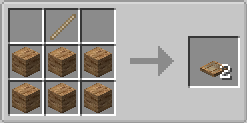
Spore collection envelope (paper and resin). To obtain resin, you'll need to find a tree/log which produces it and collect it in a bottle. You can manage this in the config. To obtain spores, collect them from the strobili with the envelope. Resin itself currently also exists as an in-game fluid, but is currently only available in creative mode: it has further development to come.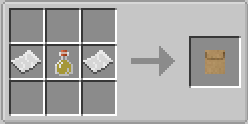
Generic sapling production from spores (water, the filled spore envelope, any dirt):
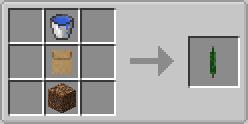
Generic sapling production from seeds or nuts (bonemeal, seeds/nuts, any dirt). Note: Primeval Pine requires a snowball in place of bonemeal:
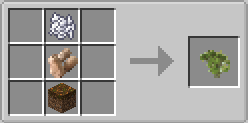
Generic thatch production (branches, string and leaves):
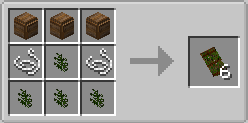
Bone wand, portal opener (diamond bock, resin, bone):
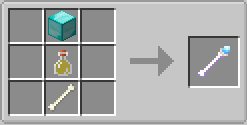
Amber Ore needs to be mined with silk-touch and then smelted into amber chunks. 9 amber chunks can be crafted into an amber block. Amber blocks and Petrified Araucarioxylon logs are combined using the standard crafting shapes to get their slabs, stairs and walls.
For those using Fossils and Archeology as part of a multi-modded park build, who might like to add these plants into the fossils/tech system instead of wild-spawning them: to implement it into your Fossils and Archeology (v. 8.0.4+) main game you will also need to follow these instructions, and then a petrified sapling will be produced occasionally by analysing regular plant fossils (or petrified wood or an amber chunk – see above) in the Analyzer, which then goes into the Cultivator with Bio-Goo in the normal way to get the final sapling for the tree.
1) Install this mod and decide whether to allow the trees to generate naturally in the config, if you wish.
2) Install this mod to enable integration into Fossils and Archeology: CraftTweaker mod: https://www.curseforge.com/minecraft/mc-mods/crafttweaker
3) Create a folder in your installation called "scripts" – if it isn't there already
4) Paste the following code into a text editor like Notepad or Notepad++ and save it as "lepidodendron.zs" (not as a .txt file!) in that scripts folder:
List of log tile entities, for anyone who needs them to configure a tree-chopper mod:
tile.lepidodendron_log
tile.glossopterislog
tile.liriodendron_log
tile.magnolia_log
tile.redwood_log
tile.wollemi_log
tile.bothrodendron_log
tile.diaphorodendron_log
tile.ginkgo_log
tile.agathis_log
tile.monkeypuzzle_log
tile.columnaris_log
tile.bunya_log
tile.tempskya_log
tile.cycadeoidea_log
tile.sahnioxlyon_log
tile.williamsonia_log
tile.zamites_log
tile.sigillaria_log
tile.sigillaria_stem
tile.calamites_log
tile.araucarioxylon_log
tile.sciadopitys_log
tile.pleuromeia_stem
tile.bjuvia_log
tile.encblue_log
tile.cycas_log
tile.leptocycas_log
tile.dioon_log
tile.spiny_cycad_log
tile.psaronius_log
tile.dicksonia_log
tile.cordaites_log
tile.wattieza_log
tile.podozamites_log
tile.walchia_log
tile.hymenaea_log
tile.mirabilis_log
tile.alpia_log
tile.medullosales_log
tile.gigantopterid_log
tile.bristlecone_log
tile.hironoia_log
tile.archaeopteris_log
tile.nilssoniocladus_stem
tile.nilssoniocladus_stem_ne
tile.nilssoniocladus_stem_nw
tile.nilssoniocladus_stem_se
tile.nilssoniocladus_stem_sw
tile.dawn_redwood_log
tile.alethopteris_log
tile.maple_log
tile.artocarpus_log
tile.ladinia_log
tile.nothofagus_log
tile.yew_log
tile.brachyphyllum_log
tile.utrechtia_stem
tile.odontopteris_stem
tile.odontopteris_stem_ne
tile.odontopteris_stem_nw
tile.odontopteris_stem_se
tile.odontopteris_stem_sw
tile.ankyropteris_stem
tile.ankyropteris_stem_ne
tile.ankyropteris_stem_nw
tile.ankyropteris_stem_se
tile.noeggerathiales_log
tile.banksia_1_log
tile.banksia_2_log
tile.taxodium_log
For anyone using BetterFoliage, add the below blacklists in the BetterFoliage config, to stop BetterFoliage doing silly, inappropriate things with these things:
Do you want to your own server to play this, or any other mods with friends? Drop my promotional code aechtrob into your order and pick up a cool 25% off with the wonderful Bisect Hosting by clicking on the image:

Disclaimers: This mod was assembled with the initial assistance of MCreator for 1.12.2….. and a whole tonne of manual edits and direct coding meaning it's now not more more than a compiler for the end product. The 1.15 or 1.16 port has nothing to do with MCreator though. I have nothing to do with the Fossils and Archeology mod and this mod is not linked to their development in any way at all, and carries no dependencies.

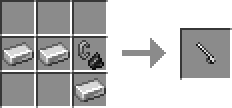
Add a comment